
NextGen was awarded a Michelson Spark Grant to implement a grassroots approach that will help ensure the digital equity needs of historically digitally redlined communities are met.
Continue reading
NextGen was awarded a Michelson Spark Grant to implement a grassroots approach that will help ensure the digital equity needs of historically digitally redlined communities are met.
Continue reading
The Michelson 20MM Foundation is proud to launch the Digital Equity in Tribal Communities Project, a new multi-year effort to address digital inequity in indigenous communities
Continue reading
Through a Spark Grant, Human-I-T will expand their already successful digital navigator #include programs by empowering students to use their newfound digital skills to access telehealth services, education, social services, online banking, and other opportunities online.
Continue reading
The Infrastructure Investment and Jobs Act dedicates $65 billion to bridge the digital divide. During Connecting California, we explored opportunities by this historic investment to improve access for communities that have been digitally redlined for decades.
Continue reading
Although the majority of the Michelson 20MM Foundation’s work around open education (OE) is focused within California, we recognize that the movement is, in fact, global. For that reason, we are proud to sponsor the 2022 Open Education Global Conference!
Continue readingRecently, a historic investment was made to ensure that every American has access to reliable, high-speed internet. The Infrastructure Investment and Jobs Act, which dedicates $65 billion to bridge the digital divide includes:
But what does all this mean, where has some of this money already gone, and how do we ensure that equity is at the forefront of how these dollars are spent? Join us for the next installment of our series, Connecting California: Solving the Digital Divide.
Speakers include:
ADRIANNE FURNISS
Executive Director, Benton Institute for Broadband & Society
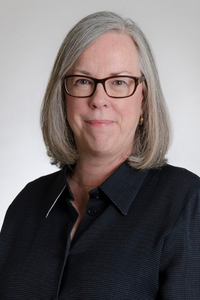
Adrianne Benton Furniss is Executive Director, Board Member, and Trustee of the Benton Institute for Broadband & Society, a private operating foundation based in the Chicago area. Benton believes everyone in the U.S. must have access to the infrastructure of opportunity–open, affordable, high-performance broadband—and the skills to make use of it, if we are to become a more equitable society. For 40 years, the Benton Institute has helped strengthen communities by advancing communications policy in the public interest while providing day-to-day support and resources to the community of people who care about “broadband for all.” Currently, Adrianne serves on the Board of Advisors for the Coalition for Local Internet Choice(CLIC) and as Secretary and Executive Committee member of the Board of Directors for PCs for People.
AMY HUFFMAN
Policy Director, National Digital Inclusion Alliance (NDIA)
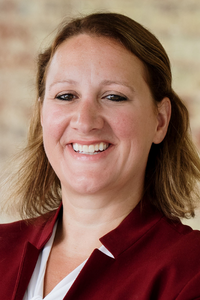
Amy Huffman joined the National Digital Inclusion Alliance (NDIA) in 2021. She is a public servant, systems thinker, innovative policy expert and a storyteller with a passion for closing the digital divide and ensuring all Americans can thrive in the 21st century’s digital world. Amy has studied and worked in the digital inclusion field for 10 years. Prior to joining NDIA, Amy served as the State of North Carolina’s first digital inclusion and policy manager for the Broadband Infrastructure Office, a division of the Department of Information Technology. Amy’s interest in technology spans beyond broadband; for several years, she was a freelance writer and consultant, contributing to tech-focused publications where she covered North Carolina’s startup ecosystem. Amy holds a Master’s Degree in Public Administration and Bachelor’s Degree in Political Science from the University of North Carolina, Chapel Hill.
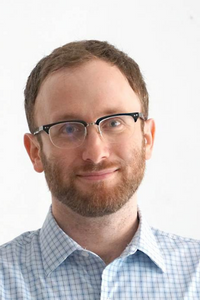
DREW GARNER
State Broadband Policy Fellow, Common Sense Media
Drew Garner is the state broadband policy fellow at Common Sense. He works to help state policymakers navigate federal funding opportunities and design programs that close the digital divide. Prior to joining Common Sense, Drew worked in the U.S. Senate, in state government, and for NBC News.
ADRIANA SANCHEZ-OCHOA
Deputy Director, NextGen Policy
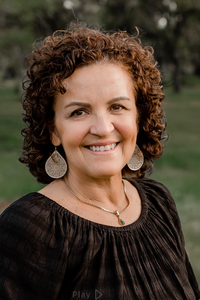
Adriana Sanchez-Ochoa is the Deputy Director of NextGen Policy and directly assists in team management and daily operations. Her policy areas of emphasis include: immigration, women’s issues, digital inclusion and equity and environmental justice. She also serves as the NGP liaison to the ethnic, women’s, and LGBT caucuses of the CA State Legislature. Before joining the NextGen Policy team, Adriana spent 18 years working in the California Legislature in various key positions. She worked for four Assembly Speakers and, in her last job with the Assembly, was the Director of International Relations and Protocol. In addition, Adriana has worked extensively with the California Latino Caucus.


Connecting California is brought to you by the Michelson 20MM Foundation. If you missed our Connecting California events, you can find the recordings on our #ConnectingCA YouTube playlist.
Michelson 20MM was founded thanks to the generous support of renowned spinal surgeon and inventor Dr. Gary K. Michelson and his wife, Alya Michelson. The Michelson 20MM Foundation is dedicated to supporting and investing in leading organizations, technologies, and initiatives that seek to transform learning and improve access to educational opportunities that lead to a meaningful career. Learn more at www.20mm.org.

California’s SB 156 was a historic investment in digital equity. Over the next year, the Public Policy Institute of California (PPIC), a Michelson Spark Grantee, will research if the bill has been implemented equitably and will also seek to uncover scalable best practices.
Continue reading
At a time when access to the internet determines one’s ability to attend classes, complete homework, find and apply for jobs, apply for public assistance, and join telehealth visits, it is essential that we close the digital divide. Please join us in welcoming the 2022 Digital Equity Spark Grantees who will help do just that!
Continue reading
Recently, a historic investment was made to ensure that every American has access to reliable, high-speed internet. But what does all this mean, where has some of this money already gone, and how do we ensure that equity is at the forefront of how these dollars are spent?
Continue reading
By Miguel Leon
This week, at a ranch in Temecula, California, tribal leaders from throughout the state will meet to discuss how to establish and maintain their own broadband networks with the ultimate goal of connecting their communities to the internet. Through a grant from the Michelson 20MM Foundation, and in partnership with other funders, the Institute For Local Self-Reliance (ILSR) will host the second installment of a series of convenings aimed at providing tribal leaders with the knowledge and tools they need to provide their communities with access to broadband. As a result, the tribal nations will be able to participate in the health, economic, educational, workforce, and civic engagement opportunities that a broadband connection affords.
Digital Indifference
For far too long, tribal communities have experienced what Dr. Traci Morris from the American Indian Policy Institute at Arizona State University has described as digital indifference. Only 67% of tribal lands in the lower 48 states have broadband access, compared to 98% of urban Americans. The COVID-19 pandemic worsened this reality as many tribal members, who typically received their internet from anchor institutions like local libraries, were unable to access these locations due to closures. Consequently, many students on tribal lands have been unable to participate in online learning due to poor or no internet connection, which caused many to drop out altogether.
A Community Centered and Driven Solution
The Tribal Broadband Bootcamp is incredibly important because it supports tribal leaders as they take matters into their own hands to help their residents. For four days, tribal leaders will learn how to crimp wire, test cables, plan out a small network, mount gear, troubleshoot problems, conduct range testing, and confirm coverage. Leaders will learn how the internet works, the history of broadband in Indian Country, and how to access current federal funding opportunities to support their efforts. Equally important, participants will build a community—a human network through which knowledge, wisdom, and support will flow so that their dependence on private industry decreases or, better yet, is entirely eliminated.
On a recent call for the California Broadband Council, a member of the public commented that renting industry owned infrastructure was a good cost saving measure that the state should implement to connect Californians to the internet. Unfortunately, if California rents fiber from private industry, we will be in the same place 20 years from now–a state with no infrastructure to call its own, at the mercy of private industry that routinely prioritizes profit over people. The tribal broadband bootcamp and its goals stand in defiance of this dependency by giving tribal leaders the knowledge, tools, and means necessary to build their own infrastructure, establish their own networks, maintain them, and connect their people without having to pay a major internet service provider for what should be a public utility. It’s one of the quickest paths toward digital sovereignty for tribal communities and simultaneously puts a public good where it belongs: in the hands of the people, those who need it most.
If you’d like to learn more about the Michelson 20MM Foundation’s digital equity initiative visit our website. Recordings of our digital equity virtual learning series Connecting California: Solving the Digital Divide are available on our YouTube channel.
Michelson 20MM is a private, nonprofit foundation seeking to accelerate progress towards a more just world through grantmaking, operating programs, and impact investing. Co-chaired and funded by Alya and Gary Michelson, Michelson 20MM is part of the Michelson Philanthropies network of foundations.
To sign up for our newsletter, click here.