Building a More Equitable Future: 2025 Highlights from Michelson 20MM

At the Michelson 20MM Foundation, 2025 was a year of meaningful expansion and deep collaboration across all pillars of our work. The team strengthened impact in open educational resources, smart justice, student basic needs, intellectual property education, digital equity, and student leadership. Across California and beyond, the organization, our partners, and student fellows have advanced solutions that make higher education more accessible and equitable for every learner. Please join us in celebrating this year’s progress.

Digital Equity: Leading the Charge for Fair, Competitive Internet Access

In 2025, Michelson 20MM focused on maintaining California’s progress in expanding reliable and affordable internet access amid growing uncertainty in federal broadband programs. The team continued our work through the California Alliance for Digital Equity and supported partners such as CHIRLA and OaklandUndivided as they worked to ensure all Californians can access stable, affordable service. Our 2025 Spark Grants highlighted the importance of community-owned broadband models and regional broadband consortiums, underscoring the value of organizations that have built long-term trust and deliver solutions that reflect local needs.

This year brought significant challenges for many Angelenos, who faced the LA fires, ICE raids, reduced funding sources, and threats to key federal digital equity and digital discrimination policies. Michelson 20MM helped raise awareness of how limited connectivity impacts communities during these crises through commentary in LAist and NPR’s All Things Considered. As we move into 2026, Michelson 20MM will continue to advocate for internet affordability, strong digital equity protections, and community-informed strategies to advance broadband for all.

Open Educational Resources (OER): Strengthening Zero Textbook Cost (ZTC) Pathways and Reimagining Textbook Affordability
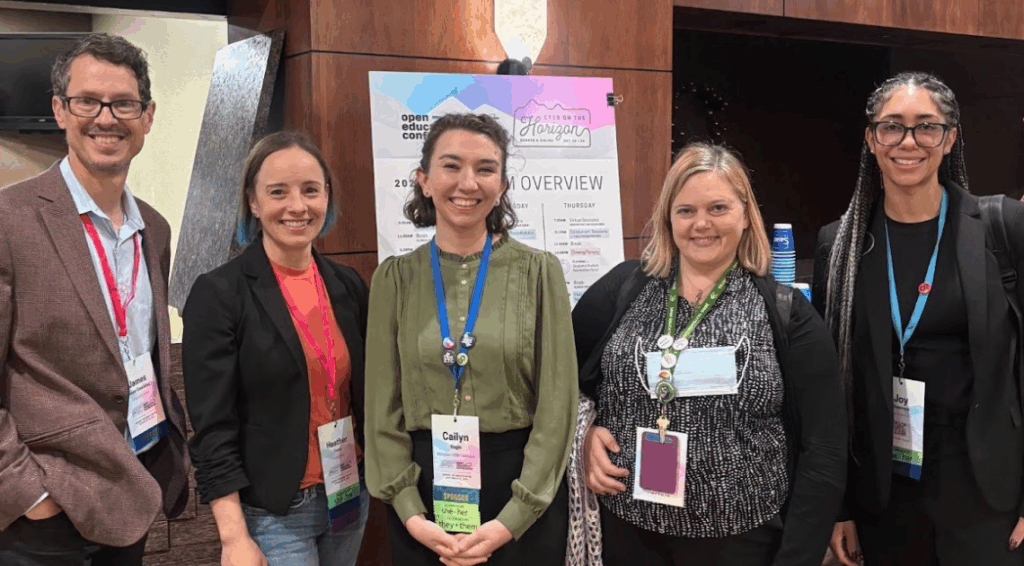
How OER is Transforming Education: Insights From the OpenEd Conference
Michelson 20MM proudly sponsored the 2025 Open Education Conference

Michelson 20MM continued to advance textbook affordability throughout the California Community Colleges (CCC). The CCC Board of Governors approved Title 5 revisions to the California Code that incorporate burden-free access to instructional materials as a policy standard. The Office of the Chancellor also affirmed that burden-free includes cost as a barrier to access. Colleges shall now build systems that expand true burden-free, OER-centered materials, furthering California as an OER pioneer. New ZTC initiatives also grew, with Irvine Valley College studying ZTC course discovery and Chabot College launching a dashboard that tracks ZTC adoption and student success under the Spark Grants program.

In parallel, the MCPP expanded OER legislative work beyond California by supporting an Oregon funding push through media engagement and advocacy training. The effort strengthened educator and student voices as the fight continues. Michelson 20MM also elevated attention to the unfair textbook market, where dominant publishers and automatic billing limit student choice. These issues were echoed by Lever News, who reported on shrinking bookstore diversity featuring expert context by OER Senior Program Manager Cailyn Nagle.

Smart Justice: A Landmark Year for Justice Reform and Incarcerated Firefighter Advocacy

This year marked major progress in justice reform and support for incarcerated firefighters. Five bills were signed into law under the Firefighting to Freedom package, advancing wages, safety, reentry options, certification access, and death benefits. Michelson 20MM also became the home of the Higher Education in Prison Funders Collaborative, strengthening coordinated philanthropy that expands high-quality education for incarcerated students.

Philanthropic advocacy was further elevated when Michelson 20MM co-hosted a statewide advocacy day with key grantmaking partners. The event allowed foundations to brief policymakers on critical issues and demonstrate how philanthropy can partner with the government. Michelson 20MM also sponsored fellows, who helped shape planning for the 2025 Prison to University Conference and advised multicampus justice-education initiatives, including the Pathways From Prison to College strategy. These efforts, combined with the team’s expanded national engagement, positioned the organization as a leading voice in justice-centered workforce and education pathways in 2025.

Student Basic Needs: Expanding Supports for Parenting Students and Advancing Equitable Systems
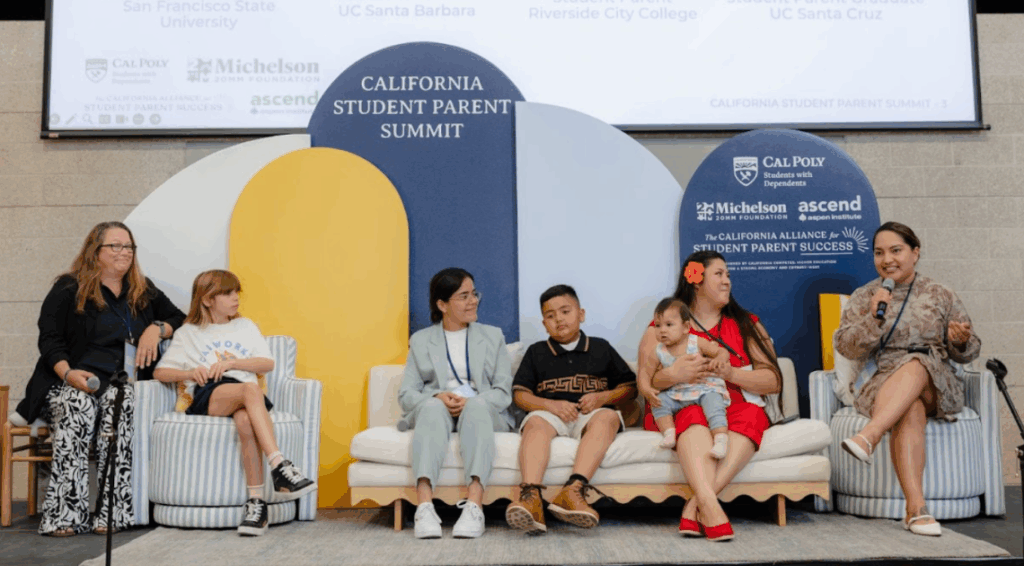
Innovate, Implement, Inspire: Highlights from the Student Parent Summit
Parenting students share their experience at the Student Parent Summit

This year, Michelson 20MM advanced more equitable systems across California. The organization sponsored the biannual Student Parent Summit, now hosted by the California Alliance for Student Parent Success, which drew nearly 300 attendees. Through the Student Parent Pooled Fund, Michelson 20MM partnered with leading funders to strengthen campus supports and expand access to resources for student parents.

The team also elevated solutions to student housing insecurity as affordability challenges grew. With the Center for Equitable Higher Education, Michelson 20MM co-hosted a webinar on the three-year evaluation of the College Focused Rapid Rehousing strategy. At the same time, Michelson 20MM partnered with the Foundation for the Los Angeles Community Colleges to highlight co-housing models between two- and four-year institutions. These efforts helped lay policy foundations for future reforms and reinforced the commitment to evidence-based strategies and cross-sector collaboration.

Student Fellows Leading Change on Campus and Beyond
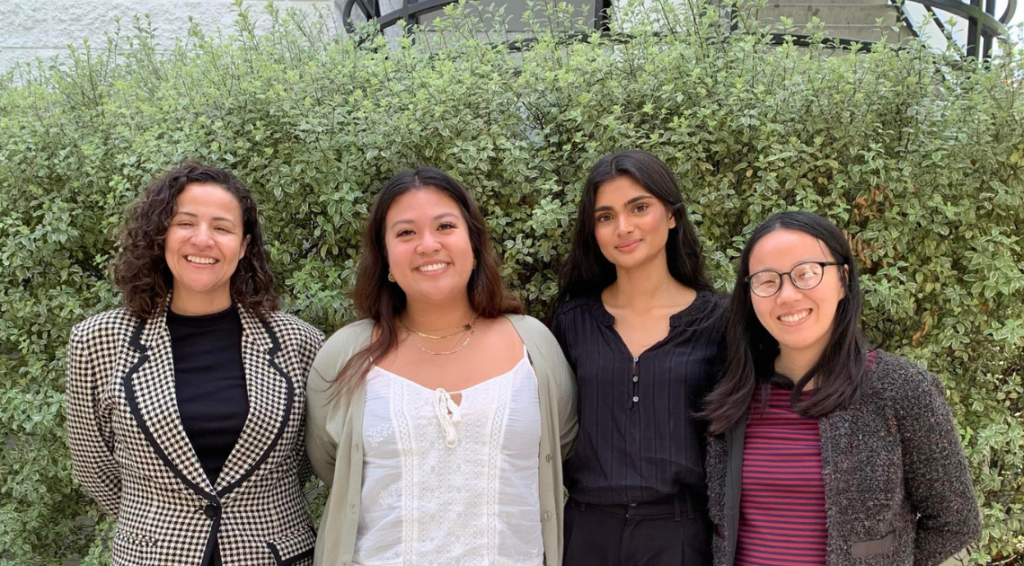
Student Leaders Driving Change: Introducing Our 2025 Michelson 20MM Fellows
The 2025 Student Fellowship cohort

The 2025 Michelson 20MM Student Fellowship Cohort drove significant statewide policy and research efforts. Fellows elevated student perspectives in OER and ZTC work at the CCC ZTC Summit and advanced local consumer protection by challenging inequitable course-material fees. Across these efforts, fellows strengthened their influence in campus and statewide policymaking, while the Student Engagement team trained more than 30 emerging leaders at the CCC General Assembly.

Fellows are also producing research that will inform California’s future policy landscape. Their work will include a Transparency Report Card to track AB 607 compliance across CCC and CSU campuses; a public opinion poll on wages and labor conditions for incarcerated firefighters; a 2025 snapshot of digital access in Los Angeles County; and the development of a student-led definition of emergency aid, using campus survey data to shape California State University-wide recommendations. Together, these projects aim to advance evidence-based strategies and amplify student voices in statewide reform.

Michelson Intellectual Property Institute (Michelson IP): Expanding Access, Strengthening Pathways
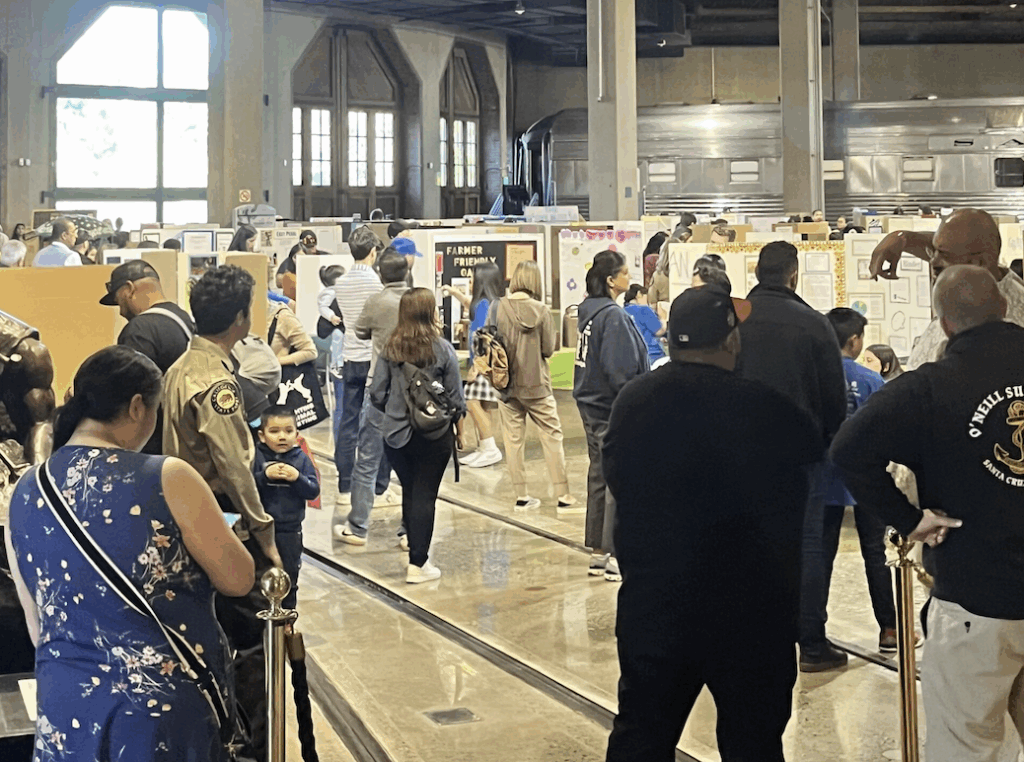
Attendees gather at the California Invention Convention

Michelson IP expanded equitable access to the innovation economy. The team grew the HBCU IP Futures Collaborative by adding five new campuses and released a publication analyzing IP ecosystems across HBCUs, led by the inaugural IP Legal Fellow. Michelson IP advanced a major K–12 invention education effort with the California Invention Convention and national partners, and introduced the Michelson Young Inventors Award at two statewide science events.

The team also broadened national reach and strengthened educator support. Adoption of The Intangible Advantage through the partnership with OpenStax increased by 50%, signaling an increased interest in IP literacy in higher education. The team continued partnering with the Pro Bono Advisory Council to connect independent inventors with expert IP practitioners. At the same time, a Slack community for Educators in Residence was launched, the Learning Exchange was updated for easier access to free IP resources, and collaboration on new teaching tools was expanded. These efforts deepened Michelson IP’s impact and helped build a more inclusive innovation landscape.

Looking to 2026

As the team looks toward 2026, Michelson 20MM remains committed to advancing bold, equitable solutions that center students and strengthen educational opportunity. This year’s progress shows what is possible when philanthropy, research, and lived experience move in unison. We are grateful to our partners and community of advocates who make this progress possible, and we look forward to building on the momentum in the year ahead.


About Michelson 20MM

Michelson 20MM is a private, nonprofit foundation working toward equity for underserved and historically underrepresented communities by expanding access to educational and employment opportunities, increasing affordability of educational programs, and ensuring the necessary supports are in place for individuals to thrive. To do so, we work in the following verticals: Digital Equity, Intellectual Property, Smart Justice, Student Basic Needs, and Open Educational Resources (OER). Co-chaired and funded by Alya and Gary Michelson, Michelson 20MM is part of the Michelson Philanthropies network of foundations.

To sign up for our newsletter, click here.

Bridging the Digital Divide with a Community-Driven Approach: UNITE-LA’s Work in the Antelope Valley and Pacoima

Bridging the Digital Divide with a Community-Driven Approach: UNITE-LA’s Work in the Antelope Valley and Pacoima

In digitally distressed neighborhoods, internet access often determines whether residents can thrive. Recognizing this, UNITE-LA is working with community leaders in the Antelope Valley and Pacoima to expand available service providers and service plan offerings. Supported by a Michelson Spark Grant, UNITE-LA’s efforts place community needs at the center of broadband design. The Spark Grant will help two communities in California move from planning to the implementation of broadband solutions. 

Antelope Valley: A New Model for Public Broadband

In the Antelope Valley, some neighborhoods do not have a single wireline internet service provider. The Community Coalition of the Antelope Valley (CoCoAV) is taking the lead to address this. Together with UNITE-LA, they will create a Joint Powers Authority (JPA), a public entity that will oversee a community-owned broadband network.

The Spark Grant funds will help bring the JPA to life. Once formed, the JPA will position Antelope Valley to apply for additional infrastructure funding. Unlike for-profit internet providers, this model prioritizes public benefit. By pooling demand across jurisdictions, it will reduce costs, attract investment, and deliver reliable internet where families need it most.

Pacoima: Organizing for Affordable Access

In Pacoima, residents have service options, but many face unaffordable or unreliable internet. Countless households pay more than $95 per month or rely on mobile hotspots. To address this inequity, the Pacoima Equity Group, together with UNITE-LA, will launch a Broadband Taskforce.

The Taskforce will bring the community together to design solutions from the ground up. Funds will cover community outreach, stakeholder convenings, and public education materials. The effort is already exploring creative models, including using a local charter school as a potential network hub.

A Shift Toward Community Power

Together, these initiatives represent a paradigm shift. Instead of waiting for large internet providers to expand into low-income neighborhoods, communities are building the systems themselves. By creating sustainable governance structures, the Antelope Valley and Pacoima are laying the foundation for long-term, sustainable digital equity.

Cristal Mojica, Senior Program Manager for Digital Equity at Michelson 20MM, emphasized the importance of this approach: “UNITE-LA’s project shows how communities can take ownership of their digital futures. By leading their own broadband solutions, the Antelope Valley and Pacoima are proving that equity and affordability go hand in hand.”

Beyond Two Communities: A Scalable Model

While rooted in local action, these projects offer an example for the entire state. UNITE-LA will document best practices and share replicable toolkits, enabling other underserved communities across the county to follow suit. By formalizing structures such as the Antelope Valley JPA and Pacoima Taskforce, these efforts will shape how broadband policy is developed in California and build upon the early and continued success of UNITE-LA’s LA DEAL consortium. LA DEAL was first launched with the support of a 2021 Digital Equity Spark Grant.

Looking Ahead

Broadband is more than a utility, it is a lifeline to education, work, healthcare, and civic participation. With the support of the Spark Grant, UNITE-LA is forging a new path forward, one in which communities build their own networks, advocate for their own needs, and ensure that no one is left offline.


About Michelson 20MM

Michelson 20MM is a private, nonprofit foundation working toward equity for underserved and historically underrepresented communities by expanding access to educational and employment opportunities, increasing affordability of educational programs, and ensuring the necessary supports are in place for individuals to thrive. To do so, we work in the following verticals: Digital Equity, Intellectual Property, Smart Justice, Student Basic Needs, and Open Educational Resources (OER). Co-chaired and funded by Alya and Gary Michelson, Michelson 20MM is part of the Michelson Philanthropies network of foundations.

CHIRLA Deepens Digital Equity in Pico-Union Through Community-Led Internet Service

CHIRLA Deepens Digital Equity in Pico-Union Through Community-Led Internet Service

The Coalition for Humane Immigrant Rights (CHIRLA) is launching the next phase of their digital equity work in Pico-Union with support from a Michelson Spark Grant. This effort will bring neighbors, advocates, and policymakers together to design an community-led internet service project rooted in the users’ lived experiences prior to launching their service. Families will shape the vision for the service that will be affordable, reliable, and culturally inclusive.

“Digital equity is about the people who use the internet as much as it is about connecting them to technology,” said Cristal Mojica, Senior Program Manager for Digital Equity at the Michelson 20MM Foundation. “CHIRLA’s leadership shows that when we center community voices, we build solutions that last.”

Listening First, Building Together

CHIRLA will engage community members and host retreats to ensure low-income and immigrant families can speak to the challenges they face every day. From students falling behind in school without access to stable internet, to parents missing telehealth visits, to families being unable to access immigration resources, these stories will guide the pilot ISP’s design.

By hiring community ambassadors to conduct door-to-door outreach, CHIRLA will reach over 2,000 members and ensure trust and inclusion remain at the center. Residents are not just participants, they are co-creators of the solutions.

From Pilot to Policy Impact

This community-driven process that respects language and cultural context is more than a step toward reliable internet, it is a vehicle for civic empowerment. CHIRLA will invite local elected officials to hear directly from families, making sure that lived experience informs policy and funding decisions. The pilot ISP will become both a proof of concept and a call to action for broader change.

Building on 2024 Momentum

This project builds on the foundation CHIRLA laid in 2024 with their Michelson Spark Grant, which will be piloting as an ISP in Pico-Union. Their early work sparked hope and connection, showing that digital equity initiatives can succeed when anchored in community trust. The 2025 grant will expand on that vision, moving to full community engagement and leadership.

Anchored in a Community Hub

The groundwork being laid today will directly support the opening of the Immigrant Welcome and Empowerment Center (IWEC) in 2026, followed by their Data Center. Located within CHIRLA’s IWEC, the Data Center will provide affordable high-speed internet while also serving as a hub for civic life, digital literacy, and community empowerment.

Why This Moment Matters

The need for action is urgent. ISPs remain largely unaccountable for serving immigrant and low-income households, and every day without action deepens the divide. By engaging now, CHIRLA is ensuring the Pico-Union community claims its right to shape the digital systems it relies on.

A Shared Vision for Connection

The Michelson 20MM Spark Grants program invests in initiatives that remove systemic barriers to equity and opportunity. Supporting CHIRLA reflects a shared belief that connected communities are stronger communities. Together, CHIRLA and Michelson 20MM are proving that digital equity is not just about bandwidth, it is about people, dignity, and the power of connecting a community.


About the Michelson 20MM Foundation

Michelson 20MM is a private, nonprofit foundation working toward equity for underserved and historically underrepresented communities by expanding access to educational and employment opportunities, increasing affordability of educational programs, and ensuring the necessary supports are in place for individuals to thrive. To do so, we work in the following verticals: Digital Equity, Intellectual Property, Smart Justice, Student Basic Needs, and Open Educational Resources (OER). Co-chaired and funded by Alya and Gary Michelson, Michelson 20MM is part of the Michelson Philanthropies network of foundations.

From Wildfires to ICE Raids, California’s Digital Divide Endangers Lives

From Wildfires to ICE Raids, California’s Digital Divide Endangers Lives

By Cristal Mojica

This January, Angelenos compulsively refreshed the Watch Duty app and local news. Together, we witnessed the two most destructive fires in Los Angeles’s history in real-time. 

Except, for many Angelenos, it was not. 

A City on Fire, A Community Left Behind

Nearly 280,000 households in Los Angeles County lack internet access. During the Eaton and Palisades fires, many households received lifesaving evacuation orders too late or not at all. 

Now, Watch Duty notifications are ramping back up and grim headlines about fire season dominate the news. At the same time, lack of affordable, reliable connectivity leaves our communities vulnerable amid another crisis: ICE raids and deportations.

Wildfires and Disconnection

Whether facing a natural disaster or an immigration sweep, the digital divide leaves our most vulnerable communities in the dark. Without affordable internet access, they can’t receive timely information, connect with loved ones, or find urgent help. In California, internet bills average $80 a month. This reality won’t change without legislative action to make connectivity truly affordable.

In the midst of wildfires, California’s digital divide is a matter of life and death. Residents with reliable internet access get real-time information about fire boundaries, evacuation orders, and emergency resources. But for those who cannot afford reliable internet service, depending on methods like word-of-mouth or radio broadcasts can be their only option. If the power goes out, as it frequently does during wildfires, or neighbors are away, lives are endangered. 

ICE Raids and Digital Barriers

These same inequities are playing out amid ongoing ICE activity. Los Angeles’ digital divide disproportionately includes immigrant communities, low-income households, and people of color. In neighborhoods where connectivity is already scarce, immigrant families often don’t receive alerts about raids. Without internet, families can’t look up legal aid or contact attorneys. They can’t even confirm whether detained loved ones are safe. Now, fear keeps many from leaving their homes. Even public spaces like libraries, which might offer internet access, are no longer an option. This isolation further harms those already struggling. 

Disconnection creates a crisis within a crisis, deepening fear, confusion, and harm. They are not isolated incidents, but symptoms of a systemic failure. Industry interests take precedence over the safety and well-being of long-marginalized communities.

There is an undeniable public safety crisis inherent in California’s digital divide, and California’s leaders must recognize that internet access is as crucial as electricity or water. It is an essential utility. 

People’s lives must take precedence over industry interests. Every Californian deserves access to reliable, affordable, and life-saving internet.


About the Michelson 20MM Foundation

Michelson 20MM is a private, nonprofit foundation working toward equity for underserved and historically underrepresented communities by expanding access to educational and employment opportunities, increasing affordability of educational programs, and ensuring the necessary supports are in place for individuals to thrive. To do so, we work in the following verticals: Digital Equity, Intellectual Property, Smart Justice, Student Basic Needs, and Open Educational Resources (OER). Co-chaired and funded by Alya and Gary Michelson, Michelson 20MM is part of the Michelson Philanthropies network of foundations.

Telling the Stories Behind the Digital Divide: Michelson 20MM Awards Spark Grant to BRITE Media

Telling the Stories Behind the Digital Divide: Michelson 20MM Awards Spark Grant to BRITE Media

The Michelson 20MM Foundation has awarded a Spark Grant to BRITE Media to create DISCONNECTED, a feature-length documentary exposing the human cost of the digital divide. Digital equity is not only about access to technology, it is about ensuring that everyone can participate fully in education, health care, civic life, and the economy. Without reliable internet, too many communities remain disconnected from opportunities others take for granted.

BRITE Media is determined to change that by bringing the fight for digital equity to the big screen and directly to the public. Through powerful storytelling, the film, which is previewed below, will show that when everyone is connected, society is stronger.

Making Policy Personal

DISCONNECTED shines a light on the people behind the policy debates. Advocates and policymakers have been working to close the digital divide, yet their work often happens out of the public’s view. Through the documentary, viewers will meet students struggling to complete homework without home internet, farmworkers unable to schedule medical appointments online, and families cut off from legal and immigration resources. Through empathy, humor, and hope, the film reveals why digital equity is essential for everyone.

“When we hear the stories behind the statistics, digital equity stops being an abstract issue and becomes urgent,” said Cristal Mojica, Senior Program Manager for Digital Equity. “Storytelling connects hearts and minds in ways data alone can’t. DISCONNECTED will help people see themselves in the fight for equity.”

Why Now Matters

The project is launching at a pivotal moment. Presently, Internet Service Providers (ISPs) remain largely unaccountable for serving rural and low-income communities. This was further evidenced by ISPs’ efforts to advance state-level public policy that would enable them to withdraw critical Carrier of Last Resort services from our communities. As a result, every day without action deepens the divide.

DISCONNECTED will premiere during a period when raising public awareness can directly influence policy and funding decisions. Timely screenings and panel discussions can give communities the tools to demand change before opportunities are lost.

Expanding the Lens

The Spark Grant will allow BRITE Media to expand filming beyond Los Angeles into Ventura County’s rural agricultural communities, including Fillmore, Santa Paula, and Oxnard. These predominantly immigrant and low-income towns face persistent broadband access challenges. Without high-speed internet, children fall behind in school, patients cannot connect with medical providers, and families have limited access to legal and immigration services.

From Screenings to Action

DISCONNECTED is both a documentary and a call to action. The filmmakers plan to debut the film at festivals, where live screenings will be followed by panel discussions with community leaders, advocates, and policymakers. These conversations will move audiences from awareness to action. As momentum builds, the team hopes to secure streaming distribution to bring the digital equity movement to millions of households nationwide.

A Shared Vision for Connection

Michelson 20MM Spark Grants program invests in initiatives that tackle systemic barriers to equity and opportunity. Supporting DISCONNECTED aligns with our belief that connected communities are stronger communities. By amplifying the voices of those most affected by the digital divide, the film seeks to inspire collective action to close the gap for good.


About the Michelson 20MM Foundation

Michelson 20MM is a private, nonprofit foundation working toward equity for underserved and historically underrepresented communities by expanding access to educational and employment opportunities, increasing affordability of educational programs, and ensuring the necessary supports are in place for individuals to thrive. To do so, we work in the following verticals: Digital Equity, Intellectual Property, Smart Justice, Student Basic Needs, and Open Educational Resources (OER). Co-chaired and funded by Alya and Gary Michelson, Michelson 20MM is part of the Michelson Philanthropies network of foundations.

Innovating for Inclusion: 2025 Digital Equity Spark Grantees Tackle the Digital Divide

Building Digital Equity in California: Spotlight on the 2025 Spark Community Advisors

Ensuring everyone has access to affordable, reliable internet is key to unlocking educational, economic, and civic potential. The Michelson 20MM Foundation is committed to closing the digital divide, especially for underserved and historically marginalized communities. Through the 2025 Digital Equity Spark Grants cycle, we are proud to invest in innovative, systems-level strategies that have the power to create meaningful change at scale.

The 2025 Digital Equity Spark Grants support projects that advance policy advocacy, promote broadband as a civil right, and address digital equity as a social determinant of health. They help shape a future where all Californians can fully participate in society, democracy, and the economy.

Welcoming the 2025 Digital Equity Spark Grantees

BRITE

BRITE will bring DISCONNECTED, a feature documentary on the digital divide, to a broad public audience. The film tells the human stories behind digital discrimination and highlights the advocates working for change. By using empathy and storytelling, the filmmakers aim to turn policy into something personal and urgent. Through screenings, panels, and community engagement, DISCONNECTED will help spark national conversations around digital equity and inspire viewers to get involved.

The Coalition for Humane Immigrant Rights (CHIRLA)

Building on their 2024 pilot internet service provider (ISP) project in Pico-Union, CHIRLA is launching a community-driven effort to close the digital divide. This project centers the voices of immigrant families by reaching over 2,000 residents to understand their internet access needs. CHIRLA staff and ambassadors will hold conversations at member retreats and through outreach that respects language and cultural context. Insights from these efforts will shape a pilot low-cost internet service designed with the community, for the community. The project also includes digital literacy education and free devices to ensure families can fully participate online.

UNITE-LA

UNITE-LA will advance community broadband pilots in Pacoima and the Antelope Valley. Their efforts target two of the most persistent barriers to digital equity: affordability and access. In partnership with local coalitions, UNITE-LA will support the launch of public broadband models rooted in community leadership and resident input. In the Antelope Valley, a new public broadband authority will begin implementing a shared network plan. In Pacoima, a task force will pilot strategies to reduce internet costs and improve service quality. This work models how place-based solutions can challenge digital redlining and shift broadband planning toward equity, transparency, and local control.

The Youth Law Center (YLC)

The YLC will help close digital equity gaps for foster and justice-involved youth. These young people face systemic barriers to internet and mobile access that stem from both restrictive institutional settings and the instability and disruptions caused by foster care experiences—barriers that can limit educational achievement, economic opportunity, and long-term well-being. YLC will assess all 58 California probation agencies for compliance with digital access laws, ensuring youth can pursue education and stay connected. The project combines legal strategy, public records research, and youth leadership to push enforcement where policy alone falls short. YLC will also advocate to expand Lifeline access, removing documentation and eligibility barriers for foster youth. This work redefines digital equity as a civil rights issue, grounded in justice and accountability.

Looking Ahead

We are inspired by the grantees’ visionary work and dedication to advancing digital equity across California. Their projects exemplify the innovative, community-centered approaches necessary to overcome systemic barriers and ensure everyone has meaningful access to the internet. As these initiatives take shape, we look forward to seeing the lasting impact they will have on public policy, community empowerment, and closing the digital divide for good.


About Michelson 20MM

Michelson 20MM is a private, nonprofit foundation working toward equity for underserved and historically underrepresented communities by expanding access to educational and employment opportunities, increasing affordability of educational programs, and ensuring the necessary supports are in place for individuals to thrive. To do so, we work in the following verticals: Digital Equity, Intellectual Property, Smart Justice, Student Basic Needs, and Open Educational Resources (OER). Co-chaired and funded by Alya and Gary Michelson, Michelson 20MM is part of the Michelson Philanthropies network of foundations.

Building Digital Equity in California: Spotlight on the 2025 Spark Community Advisors

Building Digital Equity in California: Spotlight on the 2025 Spark Community Advisors

California’s digital divide continues to harm historically underserved communities. In 2025, we’re sharpening our Spark Grants focus to support community-driven efforts that advance digital equity across the state. The following focus areas reflect this commitment and guide our work.

2025 Digital Equity Focus Area

  • Policy Advocacy and Civic Engagement to Achieve Broadband for All: Efforts that increase civic participation in digital equity policy-making and regulatory processes at the local, regional, or state-level. 
  • Digital Equity as a Social Determinant of Health: Efforts that address digital inequity through its impact as a social determinant of health. Specifically, we are seeking projects that are scalable across the state. 
  • Internet Access as a Civil Right: Eliminating digital discrimination efforts that help address the impact that low-quality and/or unaffordable Internet has in areas that may superficially appear to have Internet access. The projects should provide tools to combat digital discrimination and to promote equitable access to broadband throughout California. By focusing on the role of race in the historical causes of digital inequity, we seek to grow awareness and uplift the voices and needs of underserved communities that have been deliberately excluded from connectivity by systematic redlining and disinvestment. 

Meet the Spark Community Advisors

To help shape our approach, we’ve partnered with leaders who bring deep experience in digital equity, policy, and advocacy. The 2025 Spark Community Advisors represent diverse voices from across California. Their work reflects the very goals we seek to promote: systems change, community engagement, and equitable access for all.

Natalie González

Deputy Director Digital Equity Initiative, California Community Foundation

Natalie Gonzalez is the Deputy Director of the California Community Foundation’s (CCF’s) Digital Equity Initiative. The Initiative is a multi-year project that will seed a digital equity movement in Los Angeles County with the power and capacity to successfully advocate for fast, reliable, and affordable broadband for all. Prior to working in the digital equity space, Gonzalez worked within the Public Policy and Civic Engagement department at CCF, supporting strategic partnerships, advocacy, local, and state initiatives, and the COVID-19 Community Health Project. 

With over eight years in the nonprofit sector, Gonzalez served as Director of Engagement at Boys and Girls Clubs of Greater Conejo Valley (BGCGCV). In that role, she provided support to youth development programs and services throughout Los Angeles and Ventura counties. Gonzalez helped establish nationally recognized programs that promote youth empowerment, civic engagement, and leadership among under-resourced communities. Recently, she supported a county-wide initiative to mobilize young voters and increase voter turnout through grassroots organizing and social media activations. Gonzalez received her B.A. in Sociology from the University of California, Merced. 

Arturo Juarez

Policy Advisor, NextGen Policy

Arturo Juarez oversees the on-the-ground implementation of NextGen’s Connect Corps pilot program and helps lead their broadband and digital equity policy portfolio. His work includes program design and set up, the training and management of digital navigators, and leading a broadband policy portfolio focused on universal access, affordability, equity, and literacy and navigation. 

Arturo started his career in the private sector. He worked for a multinational investment and financial services company, where he managed a $500 million investment portfolio. In the nonprofit sector, he has held roles in advocacy, fundraising, and partnership development. Prior to joining the NextGen Policy team, Arturo worked for the Biden/Harris Presidential Campaign as a Regional Director helping to get out the vote in several battleground states during the 2020 election.

Miguel Angel Segura

Director of External Relations, Parent Institute for Quality Education (PIQE)

Miguel Ángel Segura (MÁS) holds a Bachelor of Arts (B.A.) in Political Science and Chicano/a Studies at California State University, Northridge, and Masters in Education from Loyola Marymount. After supporting the presidential campaigns for 2020, he joined the staff of US Secretary of Education Miguel Cardona on a special effort to assess the impacts of COVID-19 on schools, colleges, and universities. Miguel then served as an Advance Associate for the Office of the Vice President Kamala Harris.

Prior to his national focus, Miguel taught in Pico-Union and South Los Angeles. He also supported the LAUSD Board of Education. His focus on advocacy began early in his career when Miguel worked for a parent advocacy organization to support parents of English-learners, students with disabilities, and immigrant families. He also worked for the State Assembly and Hillary Clinton’s 2016 campaign   

As California continues to close the digital divide, community guidance, insight, and  wisdom will remain central to our approach. The 2025 focus areas and Spark Community Advisors reflect our shared commitment to advancing broadband as a civil right, a health need, and a tool for civic power. Together, we will continue to challenge systemic barriers and build lasting equity in every region of the state.

The Digital Equity Spark Grants funding cycle is currently open and will close on June 10, 2025. To learn more and submit a proposal, visit our website. 


About Michelson 20MM

Michelson 20MM is a private, nonprofit foundation working toward equity for underserved and historically underrepresented communities by expanding access to educational and employment opportunities, increasing affordability of educational programs, and ensuring the necessary supports are in place for individuals to thrive. To do so, we work in the following verticals: Digital Equity, Intellectual Property, Smart Justice, Student Basic Needs, and Open Educational Resources (OER). Co-chaired and funded by Alya and Gary Michelson, Michelson 20MM is part of the Michelson Philanthropies network of foundations.

2025 Digital Equity Spark Grants Informational Webinar

Access to digital technology and reliable Internet dictates access to education, healthcare, jobs, and meaningfully engaging in democracies. We strive to close the digital divide in all its forms, particularly among underserved and historically marginalized communities. A goal of the Michelson 20MM Foundation is to create a future in which all individuals have the broadband access and capacity needed for full participation in our society, democracy, and economy.

Michelson 20MM builds awareness of and works to close the “digital divides.” We do so through paradigm-shifting policies and convening of cross-sectoral leaders to increase investments in innovative solutions.

This year, Michelson 20MM will continue investing through the Michelson Spark Grants program to surface and scale additional solutions to these critical issues. This Digital Equity Spark Grants cycle seeks to fund projects that support systems-level strategies with potential to create positive impact at scale. We’re looking for big solutions for big problems that inform State and local public policy. 

The 2025 Digital Equity Spark Grants funding cycle opens on May 27, 2025, and closes on June 10, 2025. 

Focus Areas

  • Policy Advocacy and Civic Engagement to Achieve Broadband for All: Efforts that increase civic participation in digital equity policy-making and regulatory processes at the local, regional, or state-level. This includes the education of state policy-makers on key digital equity issues.
  • Digital Equity as a Social Determinant of Health: Efforts that address digital inequity through its impact as a social determinant of health. Specifically, we are seeking projects that are scalable across the state. Efforts that bridge the digital divide in at least one of the following issue areas:
    • Higher Education (i.e.: Research on the impact of digital inequity on college students)
    • Economic Opportunity (i.e.: Workforce development; equitable access to seeking, applying, and securing jobs)
    • Civic Engagement (i.e.: Access to public benefits)
    • Housing and Renters’ Rights (i.e.: Access to fair and affordable housing, protection of renter’s rights to internet choice)
    • Disaster Resilience and Recovery (i.e: Community-owned resources to aid in long-term disaster resilience through connectivity)
  • Internet Access as a Civil Right: Eliminating digital discrimination efforts that help address the impact that low-quality and/or unaffordable Internet has in areas that may superficially appear to have Internet access. The projects should provide tools to combat digital discrimination and to promote equitable access to broadband throughout California. By focusing on the role of race in the historical causes of digital inequity, we seek to grow awareness and uplift the voices and needs of underserved communities that have been deliberately excluded from connectivity by systematic redlining and disinvestment. These may include, but are not limited to:
    • Efforts that highlight disparities in broadband access 
    • Research that addresses mapping shortcomings at the state level
    • Storytelling, surveying, testimonial-gathering
    • Data that contributes to transparency around internet service providers (ISP) practices and services, for use in collective community advocacy efforts

Funding Cycle Details

Given the complexity of securing funding for programs and initiatives that fully address digital inequity, we welcome proposals where Spark Grant funds are coupled with multiple funding streams.

We will not fund initiatives that provide direct assistance to students during this round (e.g. laptops or hotspots for remote learning). While we realize there is a tremendous need for this type of direct support, we are leveraging our funding to effect broader systemic change.

For this funding cycle, we will focus on organizations that are doing work in California.  

Join Us to Learn More

Digital Equity Senior Program Manager Cristal Mojica and Director of Operations and Programs Ryan Erickson-Kulas will host an informational webinar on Thursday, May 15th, at 10:00 am PT. They will provide an in-depth overview of the Spark Grants program, highlight past awardees, and answer any questions from attendees.


About the Michelson 20MM Foundation

Michelson 20MM is a private, nonprofit foundation working toward equity for underserved and historically underrepresented communities by expanding access to educational and employment opportunities, increasing affordability of educational programs, and ensuring the necessary supports are in place for individuals to thrive. To do so, we work in the following verticals: Digital Equity, Intellectual Property, Smart Justice, Student Basic Needs, and Open Educational Resources (OER). Co-chaired and funded by Alya and Gary Michelson, Michelson 20MM is part of the Michelson Philanthropies network of foundations.

To sign up for our newsletter, click here

A Call for Digital Equity in Los Angeles: Experiences of a Student Fellow

A Key to the Future of Equity: Experience from a Student Fellow

The Michelson 20MM Student Fellowship empowers students to lead change in higher education. In a 10-month program, fellows learn key advocacy skills, build projects that tackle student-identified challenges, and ultimately launch a student-led campaign. Digital Equity Fellow Francesca Romero authored a survey report that examines the consequences of the discontinuation of the Affordable Connectivity Program, champions the concept of public broadband for all, and urges Los Angeles to take action. Francesca shares more about her project, her experience with the fellowship, and her advice for future fellows.

What were you hoping to achieve during this fellowship?

I hoped to grow as an advocate for the communities I care about through work on housing and digital equity.

What did you enjoy the most about the fellowship?

I loved the freedom to shape my fellowship! At first, it felt intimidating to lead something on my own. Cristal and Marissa supported every step. Their guidance helped me to step into my own confidence as a leader. I used to be shy and hesitant to speak up. Now I feel confident sharing my voice in meetings or classrooms. I feel confident in my abilities as a leader.

What advice do you have for future fellows?

Say yes as often as you can. Be open to new people, projects, and possibilities! It can be scary, but taking the chance to pursue your passions is worth it. I have so many beautiful memories from my time during the fellowship and they were because I said yes more often. You’re a student, but your work can make a real difference.

How would you describe the impact of your project?

I believe my project made a real, positive impact in Los Angeles. The Los Angeles City Council passed a digital discrimination policy in 2024. Now, residents can identify and report discrimination in internet practices. It can be difficult to articulate these types of things, because most people don’t have the time to figure out their internet speeds vs. other neighborhoods’ speeds. I hope others build on my work to expand access. More research can support advocacy for municipally-owned broadband or reporting discrimination.

How has your experience with the fellowship and your project contributed to or helped inform your next career move?

The fellowship helped inform my career because I’m now open to working for a philanthropic organization in my legal career. Additionally, my interest in housing deepened through this experience. My project gave me fascinating insights into how redlining and housing discrimination feed into digital discrimination. People shouldn’t be cut off from important services because of their zip code. Despite that, digital discrimination is carried out against low-income neighborhoods, affecting their health, schooling, job, and resource outcomes. This work confirmed my passion for equity and justice.

To learn more about the Student Fellowship and apply, visit our website. We are accepting applications until May 6, 2025.


About Michelson 20MM

Michelson 20MM is a private, nonprofit foundation working toward equity for underserved and historically underrepresented communities by expanding access to educational and employment opportunities, increasing affordability of educational programs, and ensuring the necessary supports are in place for individuals to thrive. To do so, we work in the following verticals: Digital Equity, Intellectual Property, Smart Justice, Student Basic Needs, and Open Educational Resources (OER). Co-chaired and funded by Alya and Gary Michelson, Michelson 20MM is part of the Michelson Philanthropies network of foundations.

To sign up for our newsletter, click here