
By Cailyn Nagle
This August, the California OER Conference offered both an opportunity to learn from practitioners and a chance to build community. While much of the conference took place online, the Michelson 20MM Foundation was happy to sponsor the conference and host two regional, in person happy hours.
Kicking Off: Keynotes and Collaboration in Culver City
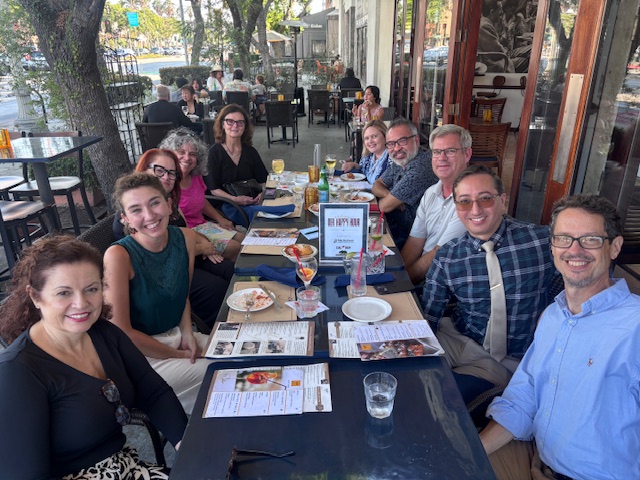
The evening before the start of the event, faculty, administrators, and advocates from across Southern California joined us for the first happy hour. The California OER community has made tremendous strides driven by the strong spirit of collaboration cultivated across the OER ecosystem. Luckily, sometimes that collaboration can also include collaborating to eat some pizza.
Dr. David Wiley kicked off the conference Wednesday morning with the first keynote of the event, during which he shared his perspective on AI, OER sustainability, and the future of open education. Dr. Wiley, founder of Lumen Learning, which provides low cost course materials through leveraging high quality OER, helped shape the open education movement and authored the influential 5 Rs of OER.
Thursday’s keynote, “The Future of Equity in OER Amid a Shifting Landscape,” pulled voices from across the country together. They shared an important and challenging conversation about the shifting national landscapes’ impact on the field. Open education practitioners approach the work from different contexts and perspectives, but are unified in the desire to build a better future for students and educators alike. Amid recent unprecedented scrutiny and challenges, hearing from OER practitioners dedicated to centering the needs of students within this atmosphere was an invaluable contribution to the conference.
Highlighting Michelson 20MM Spark Grantees and Other Sessions
The conference’s sessions ranged from updates on projects to new research and case studies. While focusing on California, the conference included participation from Connecticut, Florida, and Texas. Two strong currents throughout the conference were an interest in AI and the ongoing impact of the California Community College’s (CCC) Zero Textbook Cost (ZTC) program.
AI was covered from multiple angels beyond the keynote including best practices, a survey of trends and preferences, and multilingual education. Over the two and a half days of the conference, six AI related sessions were offered, which shows a strong interest from practitioners and the field. During Bay View’s session, which previewed their newest national survey, they shared that 62% of California faculty and 87% of California’s students reported using the technology.
The other strong thread woven throughout the event was the ongoing impact of the ZTC programs growing across the CCC system. With most ZTC programs using OER to bring their textbooks costs to zero, it is no surprise that the project, now in its final funding phases with hundreds of degree programs underway, has garnered deserved attention. Some of the sessions focused on providing updates on the progress of the system-wide effort while others gave a peak into more regional projects. The presenters from Chabot College gave an update on a multi-campus effort to build a dynamic dashboard created from diverse sets of data that shows the impacts, gaps, and outcomes of ZTC efforts. The dashboard, funded through a Michelson 20MM Spark Grant, has gained momentum with new campuses signing on to participate. Irvine College also featured another Spark Grant-funded ZTC program that investigates how students find and access ZTC efforts.
Beyond these themes, the Systems Update from the University of California (UC), the California State College and University (CSU), and the CCC offices shared the upcoming open education projects, challenges, and direction the largest systems of higher education in the country are considering. Other sessions took a more detailed look at issues facing institutions of higher learning, such as automatic textbook billing. Additionally, faculty from Eastern Connecticut State University sharing new research in their session ‘Is Automatic Textbook Billing Beneficial for Your Institution? A Case Study.”
Closing Out with Camaraderie in Oakland
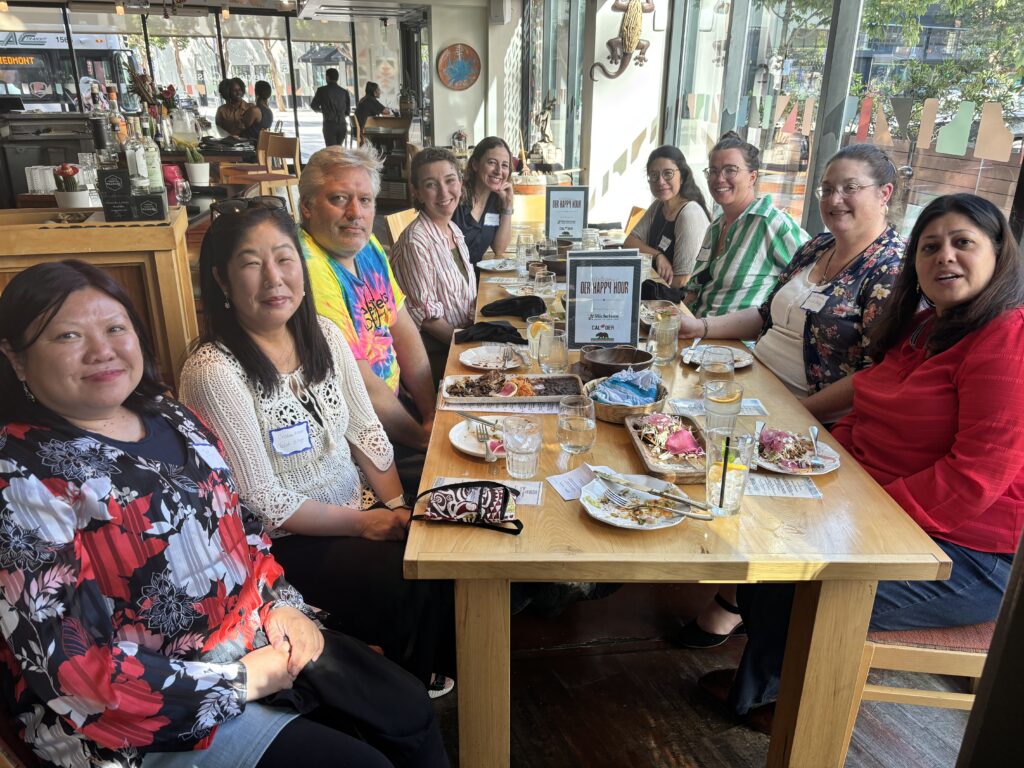
Educators and open community members from CCC, UC, and local private colleges closed the conference in Oakland at the second Michelson 20MM OER Happy Hour. While we have been happy to host four previous similar events in Los Angeles, this was our first in the Bay Area. With guests coming in on trains, carpools, and around the block, we are deeply grateful to all who attended the event. While open education is a growing field, and much larger than even just a few years ago, many OER practitioners often feel siloed in their work. That makes building community and connections a vital part of creating the thriving and sustainable OER ecosystem we need. We are honored to be part of building that community.
Michelson 20MM Foundation
Michelson 20MM is a private, nonprofit foundation working toward equity for underserved and historically underrepresented communities by expanding access to educational and employment opportunities, increasing affordability of educational programs, and ensuring the necessary supports are in place for individuals to thrive. To do so, we work in the following verticals: Digital Equity, Intellectual Property, Smart Justice, Student Basic Needs, and Open Educational Resources (OER). Co-chaired and funded by Alya and Gary Michelson, Michelson 20MM is part of the Michelson Philanthropies network of foundations.