Announcing the 2025 Student Basic Needs Spark Grantees

2025 Student Basic Needs Spark Grants Funding Cycle Informational Webinar

At Michelson 20MM Foundation, we believe that students deserve more than access to college—they deserve the stability, dignity, and support needed to persist and thrive. Yet for millions of students across California, basic needs insecurity remains a daily barrier to academic success. Housing instability, food insecurity, gaps in public benefits, and limited access to paid career pathways too often force students to choose between survival and education.

To address these issues, Michelson 20MM is proud to announce the 2025 Student Basic Needs Spark Grant recipients—three outstanding organizations advancing bold, systems-level solutions to strengthen student stability and economic mobility across the state. This year’s grantees reflect a shared commitment to tackling root causes, aligning systems, and building scalable models that can influence policy and practice far beyond a single campus or community.

California Competes: Aligning Public Benefits and Higher Education at Scale

California Competes is launching California Alliance for Streamlining Public Investments and Resources for Every Student (California ASPIRES), a statewide coalition dedicated to streamlining how students access public benefits while pursuing higher education. The coalition brings together leaders from higher education systems, state agencies, workforce and human services organizations, philanthropy, and—critically—students themselves.

Functioning as a connective infrastructure that aligns policies, data, and implementation efforts across systems, California ASPIRES seeks to reduce administrative barriers that prevent students from accessing food, housing, healthcare, childcare, and income supports. Students from all three public higher education segments helped design the coalition’s mission and governance and will continue to shape priorities through advisory and coalition roles. Centering student voices will enable solutions that are responsive to real barriers students face.

NextGen Policy: Building Debt-Free Pathways to Economic Mobility

NextGen Policy is convening a statewide policy coalition that brings together industry, higher education, workforce entities, and policymakers to build a comprehensive apprenticeship ecosystem—one that expands opportunities beyond traditional trades into high-demand and emerging fields. 

Modernizing and scaling apprenticeship pathways will offer students a paid, debt-free path to family-sustaining careers. For students facing financial insecurity, paid work-based learning can be transformative, supporting basic needs today while opening doors to long-term economic mobility.

Raise The Barr: Reimagining Emergency Aid as Systems Infrastructure

Raise The Barr is reframing emergency student aid from a short-term relief mechanism into a systems-level intervention that can be examined, aligned, and institutionalized across higher education settings. 

Rather than creating a new program or platform, this project focuses on learning and alignment. By analyzing how timing, design, and coordination affect housing stability, public benefits access, and enrollment persistence, Raise The Barr aims to generate practical, transferable frameworks that colleges can embed into existing systems. The result will be actionable guidance to help emergency aid move from grant-dependent relief to sustainable, student-centered institutional practice.

Why This Matters

Together, the 2025 Student Basic Needs Spark Grantees reflect what’s possible when innovation meets equity. These projects recognize that student success does not happen in silos—and neither should solutions. We are honored to support this year’s grantees and look forward to sharing more as their work unfolds.

About the Michelson 20MM Foundation

Michelson 20MM is a private, nonprofit foundation working toward equity for underserved and historically underrepresented communities by expanding access to educational and employment opportunities, increasing affordability of educational programs, and ensuring the necessary supports are in place for individuals to thrive. To do so, we work in the following verticals: Digital Equity, Intellectual Property, Smart Justice, Student Basic Needs, and Open Educational Resources (OER). Co-chaired and funded by Alya and Gary Michelson, Michelson 20MM is part of the Michelson Philanthropies network of foundations.

To sign up for our newsletter, click here

Statewide Supports: The 2025 Student Parent Pooled Fund Grantees

Statewide Supports: The 2025 Student Parent Pooled Fund Grantees

Student parents are a significant demographic on California’s college campuses. California Competes estimates that 17% of undergraduates in the state are parents. The California Alliance for Student Parent Success found that 61% of student parents are first-generation students and 54% have more than one child. Not only are parenting students balancing the demands of childcare and work while studying, but they also often live in rural areas with long commutes to school, making flexible class schedules and online offerings a priority.  

The California Student Parent Pooled Fund recognizes these challenges, advocates for the needs of student parents, and invests in multi-generational solutions for families’ well-being on campus. Please join us in welcoming the 2025 California Student Parent Pooled Fund grantees.

Meet the Grantees

Mt. San Antonio College (Mt. SAC) – Regional Student Parent Transfer Success Project

Mt. SAC is launching a regional initiative to strengthen transfer support for student parents across community colleges in Los Angeles, San Bernardino, and Orange Counties. The collaborative model establishes a shared infrastructure to help colleges coordinate services, expand resources, and build stronger pathways to four-year universities. By elevating parent voices and improving navigation tools, the scalable model helps families move through college with greater confidence and stability. 

Western Governors University (WGU) – California Online Student Parent Research Initiative

WGU is spearheading a statewide initiative to improve outcomes for online student parents across California, where it serves over 16,800 learners. Through comprehensive research, the project will identify challenges specific to online learners with caregiving responsibilities and highlight strategies that improve their academic experience. Student parents will shape findings that inform training, institutional practices, and advocacy. The effort will culminate in a public Student Parent Success Playbook, offering practical guidance for colleges serving remote learners and expanding opportunities for families who rely on flexible pathways to complete their degrees.

Young Invincibles – Student Parent Power: Advancing Equity Through Leadership and Policy

Young Invincibles is integrating student parents into statewide youth organizing efforts that guide policy and advocacy in California. Through leadership development, listening sessions, and coalition partnerships, the project will provide an avenue for student parents to shape recommendations on childcare access, basic needs, and financial stability. Dedicated fellowship roles and organizing opportunities will elevate parent voices in key decision-making spaces while highlighting the realities and strengths of student parents. 

Aligning Research, Advocacy, and Community for Long-Term Change

Together, the grantees advance the Student Parent Pooled Fund’s commitment to research and practice; movement building; education, awareness, and narrative change; policy advocacy; and evaluation and impact. We are grateful for their commitment to build a coordinated movement that elevates parent voices and drives policy solutions that improve access to essential supports. With this shared work, California moves closer to a higher education system where student parents and their families can thrive.

Special thank you to our funding partners: the Conrad N. Hilton Foundation, ECMC Foundation, R&S Kayne Foundation, Stupski Foundation, and The Ichigo Foundation.


About Michelson 20MM

Michelson 20MM is a private, nonprofit foundation working toward equity for underserved and historically underrepresented communities by expanding access to educational and employment opportunities, increasing affordability of educational programs, and ensuring the necessary supports are in place for individuals to thrive. To do so, we work in the following verticals: Digital Equity, Intellectual Property, Smart Justice, Student Basic Needs, and Open Educational Resources (OER). Co-chaired and funded by Alya and Gary Michelson, Michelson 20MM is part of the Michelson Philanthropies network of foundations.

Building a More Equitable Future: 2025 Highlights from Michelson 20MM

At the Michelson 20MM Foundation, 2025 was a year of meaningful expansion and deep collaboration across all pillars of our work. The team strengthened impact in open educational resources, smart justice, student basic needs, intellectual property education, digital equity, and student leadership. Across California and beyond, the organization, our partners, and student fellows have advanced solutions that make higher education more accessible and equitable for every learner. Please join us in celebrating this year’s progress.

Digital Equity: Leading the Charge for Fair, Competitive Internet Access

In 2025, Michelson 20MM focused on maintaining California’s progress in expanding reliable and affordable internet access amid growing uncertainty in federal broadband programs. The team continued our work through the California Alliance for Digital Equity and supported partners such as CHIRLA and OaklandUndivided as they worked to ensure all Californians can access stable, affordable service. Our 2025 Spark Grants highlighted the importance of community-owned broadband models and regional broadband consortiums, underscoring the value of organizations that have built long-term trust and deliver solutions that reflect local needs.

This year brought significant challenges for many Angelenos, who faced the LA fires, ICE raids, reduced funding sources, and threats to key federal digital equity and digital discrimination policies. Michelson 20MM helped raise awareness of how limited connectivity impacts communities during these crises through commentary in LAist and NPR’s All Things Considered. As we move into 2026, Michelson 20MM will continue to advocate for internet affordability, strong digital equity protections, and community-informed strategies to advance broadband for all.

Open Educational Resources (OER): Strengthening Zero Textbook Cost (ZTC) Pathways and Reimagining Textbook Affordability

How OER is Transforming Education: Insights From the OpenEd Conference
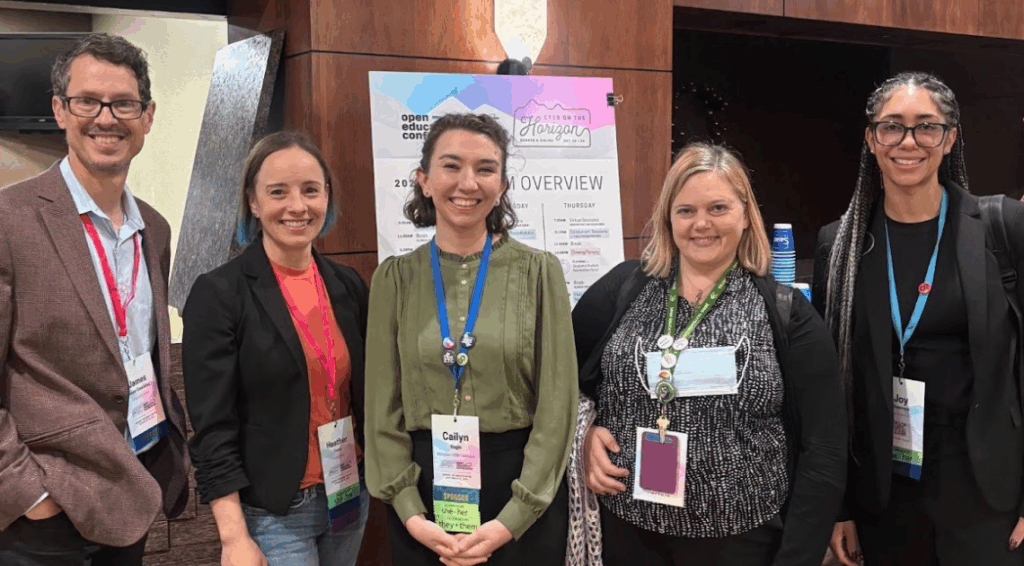
Michelson 20MM proudly sponsored the 2025 Open Education Conference

Michelson 20MM continued to advance textbook affordability throughout the California Community Colleges (CCC). The CCC Board of Governors approved Title 5 revisions to the California Code that incorporate burden-free access to instructional materials as a policy standard. The Office of the Chancellor also affirmed that burden-free includes cost as a barrier to access. Colleges shall now build systems that expand true burden-free, OER-centered materials, furthering California as an OER pioneer. New ZTC initiatives also grew, with Irvine Valley College studying ZTC course discovery and Chabot College launching a dashboard that tracks ZTC adoption and student success under the Spark Grants program.

In parallel, the MCPP expanded OER legislative work beyond California by supporting an Oregon funding push through media engagement and advocacy training. The effort strengthened educator and student voices as the fight continues. Michelson 20MM also elevated attention to the unfair textbook market, where dominant publishers and automatic billing limit student choice. These issues were echoed by Lever News, who reported on shrinking bookstore diversity featuring expert context by OER Senior Program Manager Cailyn Nagle.

Smart Justice: A Landmark Year for Justice Reform and Incarcerated Firefighter Advocacy

This year marked major progress in justice reform and support for incarcerated firefighters. Five bills were signed into law under the Firefighting to Freedom package, advancing wages, safety, reentry options, certification access, and death benefits. Michelson 20MM also became the home of the Higher Education in Prison Funders Collaborative, strengthening coordinated philanthropy that expands high-quality education for incarcerated students.

Philanthropic advocacy was further elevated when Michelson 20MM co-hosted a statewide advocacy day with key grantmaking partners. The event allowed foundations to brief policymakers on critical issues and demonstrate how philanthropy can partner with the government. Michelson 20MM also sponsored fellows, who helped shape planning for the 2025 Prison to University Conference and advised multicampus justice-education initiatives, including the Pathways From Prison to College strategy. These efforts, combined with the team’s expanded national engagement, positioned the organization as a leading voice in justice-centered workforce and education pathways in 2025.

Student Basic Needs: Expanding Supports for Parenting Students and Advancing Equitable Systems

Innovate, Implement, Inspire: Highlights from the Student Parent Summit
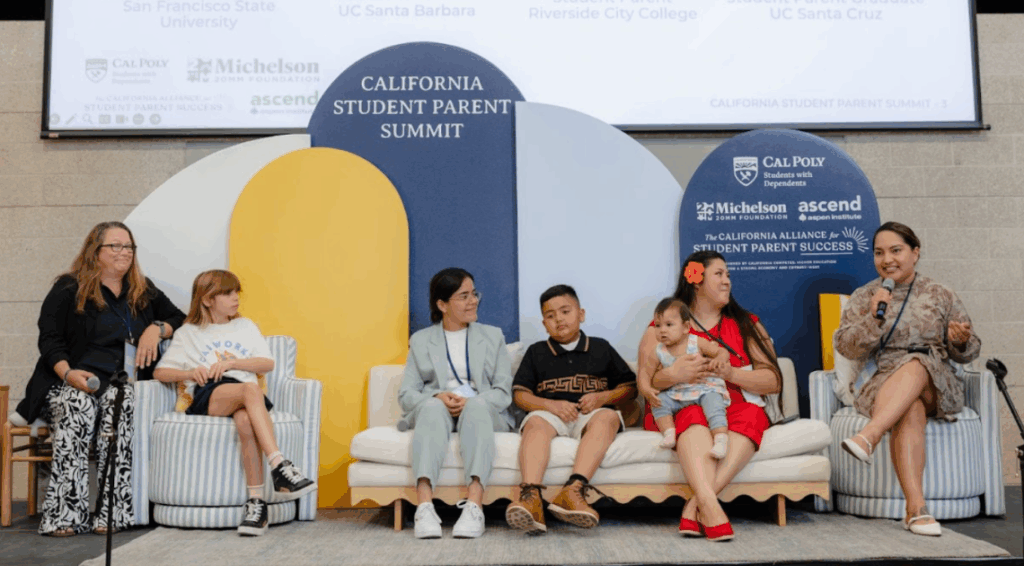
Parenting students share their experience at the Student Parent Summit

This year, Michelson 20MM advanced more equitable systems across California. The organization sponsored the biannual Student Parent Summit, now hosted by the California Alliance for Student Parent Success, which drew nearly 300 attendees. Through the Student Parent Pooled Fund, Michelson 20MM partnered with leading funders to strengthen campus supports and expand access to resources for student parents.

The team also elevated solutions to student housing insecurity as affordability challenges grew. With the Center for Equitable Higher Education, Michelson 20MM co-hosted a webinar on the three-year evaluation of the College Focused Rapid Rehousing strategy. At the same time, Michelson 20MM partnered with the Foundation for the Los Angeles Community Colleges to highlight co-housing models between two- and four-year institutions. These efforts helped lay policy foundations for future reforms and reinforced the commitment to evidence-based strategies and cross-sector collaboration.

Student Fellows Leading Change on Campus and Beyond

Student Leaders Driving Change: Introducing Our 2025 Michelson 20MM Fellows
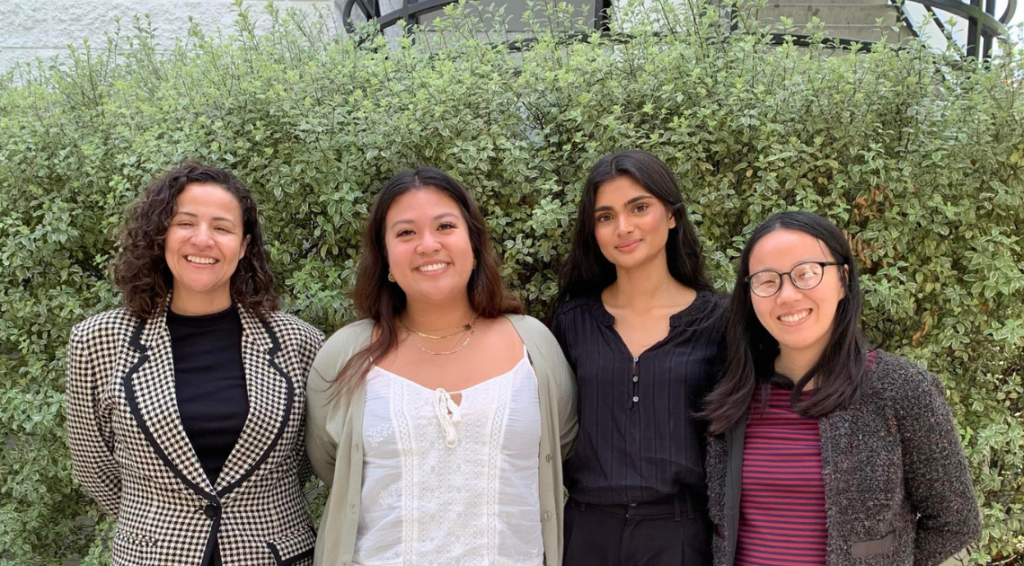
The 2025 Student Fellowship cohort

The 2025 Michelson 20MM Student Fellowship Cohort drove significant statewide policy and research efforts. Fellows elevated student perspectives in OER and ZTC work at the CCC ZTC Summit and advanced local consumer protection by challenging inequitable course-material fees. Across these efforts, fellows strengthened their influence in campus and statewide policymaking, while the Student Engagement team trained more than 30 emerging leaders at the CCC General Assembly.

Fellows are also producing research that will inform California’s future policy landscape. Their work will include a Transparency Report Card to track AB 607 compliance across CCC and CSU campuses; a public opinion poll on wages and labor conditions for incarcerated firefighters; a 2025 snapshot of digital access in Los Angeles County; and the development of a student-led definition of emergency aid, using campus survey data to shape California State University-wide recommendations. Together, these projects aim to advance evidence-based strategies and amplify student voices in statewide reform.

Michelson Intellectual Property Institute (Michelson IP): Expanding Access, Strengthening Pathways

Attendees gather at the California Invention Convention

Michelson IP expanded equitable access to the innovation economy. The team grew the HBCU IP Futures Collaborative by adding five new campuses and released a publication analyzing IP ecosystems across HBCUs, led by the inaugural IP Legal Fellow. Michelson IP advanced a major K–12 invention education effort with the California Invention Convention and national partners, and introduced the Michelson Young Inventors Award at two statewide science events.

The team also broadened national reach and strengthened educator support. Adoption of The Intangible Advantage through the partnership with OpenStax increased by 50%, signaling an increased interest in IP literacy in higher education. The team continued partnering with the Pro Bono Advisory Council to connect independent inventors with expert IP practitioners. At the same time, a Slack community for Educators in Residence was launched, the Learning Exchange was updated for easier access to free IP resources, and collaboration on new teaching tools was expanded. These efforts deepened Michelson IP’s impact and helped build a more inclusive innovation landscape.

Looking to 2026

As the team looks toward 2026, Michelson 20MM remains committed to advancing bold, equitable solutions that center students and strengthen educational opportunity. This year’s progress shows what is possible when philanthropy, research, and lived experience move in unison. We are grateful to our partners and community of advocates who make this progress possible, and we look forward to building on the momentum in the year ahead.


About Michelson 20MM

Michelson 20MM is a private, nonprofit foundation working toward equity for underserved and historically underrepresented communities by expanding access to educational and employment opportunities, increasing affordability of educational programs, and ensuring the necessary supports are in place for individuals to thrive. To do so, we work in the following verticals: Digital Equity, Intellectual Property, Smart Justice, Student Basic Needs, and Open Educational Resources (OER). Co-chaired and funded by Alya and Gary Michelson, Michelson 20MM is part of the Michelson Philanthropies network of foundations.

To sign up for our newsletter, click here.

2025 Student Basic Needs Spark Grants Informational Webinar

In California, nearly half of community-college students report food insecurity and approximately three out of five students struggle with housing instability. When students face unstable housing or skip meals, their academic focus and completion rates suffer. Systems that integrate policy, benefits, and housing supports help students build stability. Through the 2025 Student Basic Needs Spark Grants funding cycle, we’re seeking to make student basic needs supports sustainable.

The Student Basic Needs funding cycle will be open for proposals from December 1st to December 15th, 2025. Through it, we seek to fund macro-level projects that support systems-level strategies, creating impact at scale and informing public policy. The vision for the Spark Grant Program is to introduce an innovative just-in-time grantmaking process to fill urgent needs for higher education organizations that are well-aligned with our focus areas.

The Michelson 20MM Student Basic Needs Initiative works to remove barriers that prevent students from thriving in higher education by addressing housing, food, and financial insecurity. Grounded in student voice and lived experience, the initiative advances systems change through research, advocacy, and collaboration. We focus on sustainable, scalable solutions to ensure every student has the stability needed to graduate and achieve long-term economic mobility.

Funding Cycle Focus Areas

We are interested in supporting projects that advance:

  • Systemic approaches and actionable strategies for higher education systems to address student housing and food insecurity. These can include but aren’t limited to:
    • Implementing and integrating policies, such as AB 79 (Basic Needs Implementation and Data Coordination) and similar legislation addressing student housing, food security, and financial stability.
    • Innovative approaches that facilitate the transfer of public benefits, housing supports, and other resources when students move between institutions.
    • Innovative and scalable financing and partnership models that address student housing and food insecurity
    • Policy advocacy efforts that systematically address housing and food insecurity
  • Innovative approaches that strengthen equitable economic mobility and long-term student stability. These can include but aren’t limited to:
    • Expanding workforce development pipelines that promote economic mobility for low-income and first-generation students (including those that strategically leverage work study)
    • Supporting post-graduation housing and employment transition programs that extend basic needs support beyond college completion
    • Models that move basic needs operations from grant-based to sustainable, institutionalized systems with skilled, permanent staff (including innovative approaches that mitigate the impact of recent federal policy shifts)
    • Policy advocacy efforts that strengthen economic mobility and long-term student stability
    • Innovative and scalable financing and partnership models that strengthen economic mobility and long-term student stability
  • Systematic approaches that address basic needs insecurity via innovative Emergency Student Aid models. These can include but aren’t limited to:
    • Evaluating and scaling emergency aid and direct financial assistance programs to assess and ensure their long-term impact on retention, degree completion, and post-graduation stability
    • Scalable Strategies to Support Students Ineligible for State or Federal Aid
    • Innovative financing and partnership models that help scale and sustain emergency student aid
    • Policy advocacy efforts that systematically address emergency student aid

Funding Cycle Details

  • We will be awarding grants up to $25,000 to nonprofits and educational institutions looking for support of projects that align with one of the focus areas outlined above. Please note your project must address at least one of our focus areas in order to be considered.
  • We welcome proposals where Michelson Spark Grant funds are part of a larger overall project with multiple funding streams.
  • The Spark Grant Program is available to United States–based nonprofits and educational institutions. For this round, we have decided to focus our impact on organizations that are doing work in California. Organizations whose work does not impact California will be ineligible for this opportunity. 

Join Us to Learn More

On November 20th, members of the grant committee will host an informational webinar, which will provide an in-depth overview of the Spark Grants Program, highlight past awardees, and provide detailed updates on the funding cycle.


About the Michelson 20MM Foundation

Michelson 20MM is a private, nonprofit foundation working toward equity for underserved and historically underrepresented communities by expanding access to educational and employment opportunities, increasing affordability of educational programs, and ensuring the necessary supports are in place for individuals to thrive. To do so, we work in the following verticals: Digital Equity, Intellectual Property, Smart Justice, Student Basic Needs, and Open Educational Resources (OER). Co-chaired and funded by Alya and Gary Michelson, Michelson 20MM is part of the Michelson Philanthropies network of foundations.

To sign up for our newsletter, click here

Sharing Space, Building Opportunity: Reflections on the Reality of Co-Housing Agreements in Higher Ed

By Evelyn Lucho

The Los Angeles Community College District (LACCD) serves over 200,000 students. Half report incomes near or below the poverty line, and 64% report experiencing a basic needs insecurity. With these needs in mind, LACCD sought an opportunity for California State University (CSU) and California Community Colleges (CCC) housing departments to partner and house students. Through a Spark Grant from Michelson 20MM, the team explored and researched alternative housing support strategies.

Lessons Learned From Co-Housing Partnerships

The research focused on opportunities and challenges in higher education partnerships that leveraged underutilized university dorms to house community college students. The findings, presented during Collaborative Solutions: Addressing Community College Student Housing Insecurity Through University Partnerships, show co-housing partnerships are complex yet feasible. When created with intentionality, these collaborations can extend far beyond housing logistics to support student well-being and create mutually beneficial outcomes for all involved.

Although only a handful of institutions are pursuing co-housing partnerships, a statewide movement is pushing to make this approach possible. Ria Bhatt shared key enabling conditions for co-housing: funding availability, including state and public dollars; raising basic needs awareness on campus; prioritizing transfer students; and statewide strategies to strengthen the education pipeline for transfers to four-year universities. 

Three key challenges complicate collaboration: institutional culture, governance and staffing structures, and procedural rigidity. “Developing innovative modules that require interdependence and flexibility across organizations is really challenging, especially when control and outcomes cannot be guaranteed,” Maureen Carew shared. “Bureaucracies are, by design, cautious. Standard operating procedures prioritize stability and compliance, which makes cross-institutional collaboration seem risky and unmanageable, especially when success depends on another institution’s follow-through.”

Ultimately, a district and leadership team that insist on the systems, culture, policies, and practices that promote an understanding of student needs coupled with a comprehensive set of supports can accomplish great strides in securing student housing. While strong local leadership makes innovation possible, systems-level policy is needed to scale. Institutions and districts should build on promising local models, such as  Riverside Community College District (RCCD) and the University of California, Riverside’s (UCR’s) model, and work to embed partnership best practices into culture, policy, and infrastructure across higher education.

Innovative Housing Partnerships

The discussion took a closer look at the partnership between RCCD and UCR. The RCCD-UCR Residential Scholars Program is the first in the state to develop a clearer transfer pipeline for RCCD students to live at UCR while pursuing their studies. Now in its third year, it gives first-generation students the opportunity to see and experience a four-year institution, making transferring much more realistic and attainable to them.  Similarly, the Den2Den Housing Pathways Program between San Bernardino Valley College (SBVC) and CSU San Bernardino allows eligible SBVC students to live and enjoy full access to CSUSB campus dining and amenities, incorporating the students as part of the vibrant college community. 

The programs succeed by developing a shared vision, engaging diverse team members, creating clear institutional agreements, building community, and planning for sustainability. Teams also developed contingency plans, collected data to use for improvement, and tracked outcomes.  

Dyeem Tolbert, Residential Scholar, shared, “It’s just amazing to be here because I want to be at a UC… I want to be part of the groups, part of the programs at UCR… I want to transfer already.” Tolbert’s reflection highlights that the program is not only meeting a student’s basic housing needs but also fostering academic motivation and a strong sense of belonging. By supporting stability and inclusion, the program helps students stay on track to achieve their educational goals and ultimately earn their degree. 

An Opportunity to Scale the Model

The co-housing model clearly succeeds: it provides students with stable housing while cultivating belonging, persistence, and growth. As students bring their full selves to campus, new challenges arise. Mental health and behavioral needs require intentional and compassionate support. 

As Dr. Mathew Smith of CSUSB reminded us, “This is the fullness of who students are, especially at this developmental level. And we have to be ready to address that.” These reflections underscore the importance of strengthening and expanding co-housing initiatives. Now more than ever, institutions have the opportunity, and responsibility, to invest in models that embrace the whole student, ensuring they are not only housed, but truly supported in their journey to thrive and succeed.

If you’d like to implement a similar model on your campus, an example agreement is available. You may also download the slides shared.


About the Michelson 20MM Foundation

Michelson 20MM is a private, nonprofit foundation working toward equity for underserved and historically underrepresented communities by expanding access to educational and employment opportunities, increasing affordability of educational programs, and ensuring the necessary supports are in place for individuals to thrive. To do so, we work in the following verticals: Digital Equity, Intellectual Property, Smart Justice, Student Basic Needs, and Open Educational Resources (OER). Co-chaired and funded by Alya and Gary Michelson, Michelson 20MM is part of the Michelson Philanthropies network of foundations.

Innovate, Implement, Inspire: Highlights from the Student Parent Summit 

Innovate, Implement, Inspire: Highlights from the Student Parent Summit

By Evelyn Lucho

The Student Parent Summit 2025: Innovate, Implement, Inspire brought together nearly 300 advocates, practitioners, researchers, and student parents for two days of learning, connection, and action. This year’s summit marked the largest gathering yet. It created space to both celebrate progress and deepen commitments to advancing equity for student parents in higher education.

The summit began in San Luis Obispo with an afternoon of GAINS Act Office Hours and a Drop-In Networking Lounge focused on the implementation of this bill across institutions. The energy carried into the opening reception, which welcomed a record 177 participants, including advocates, practitioners, student parents, and their families. 

A Keynote Rooted in Lived Experience

The first full day opened with an unforgettable keynote by Stephanie Land. She is the New York Times bestselling author of Class and Maid, which was adapted as a Netflix series, and a former student parent. In a raw and moving conversation, Land spoke candidly about the barriers she faced as a parenting student and the determination it took to pursue her education while raising her daughter. Her story deeply resonated with the audience and served as a reminder that policy and programmatic solutions must always be grounded in the lived realities of those most impacted. 

Action-Oriented Sessions

Throughout the summit, participants engaged in sessions tailored for a range of California’s higher education landscape across all three public systems. Sessions emphasized the institutionalization of student parent programs and initiatives as well as the development of practical, actionable solutions that attendees can implement. From sharing innovative campus practices to spotlighting systemwide initiatives, discussions focused on building sustainable supports for parenting students. At the same time, the conference underscored the importance of addressing the unique needs of each campus and system. 

There are many passionate and dedicated practitioners working to advance student-parent success. This year, we were honored to celebrate and recognize two of them with the Innovate Award; one institution with the Implement Award; as well as one advocacy organization and three student parents with the Inspire Award for their efforts. 

Family Voices at the Center

The summit closed with a multigenerational family panel, which featured current and former student parents and their children. Their collective voices served as a powerful reminder of the importance of creating supportive, equitable, and accessible systems. Such systems must recognize and honor their dual roles as caregivers and scholars. Panelists recounted the barriers student parents face inside and outside of the classroom. The conversation also highlighted the experience of navigating higher education with young children. 

“I was embarrassed to take my baby to math class; now here she is, sitting with me at a panel,” panelist Kalisha Gomez of Riverside City College shared. It was truly inspiring to witness what is accomplished when inclusive spaces make room for students to show up as their authentic selves and are embraced by the community. 

Ground the Summit in Student Voices

Andrea Lara Jara, Michelson 20MM’s Student Fellow for Basic Needs and a student parent herself, joined us at the summit. Andrea recounted the experience as a space for student parents and institutions to sit together and look closely at both the barriers and the possibilities. 

After attending a session, Andrea reflected on the honest and innovative conversations. One thing that stood out to her was how the discussion on data collection moved beyond compliance to consider trauma. Participants recognized that peer-to-peer approaches can not only strengthen data collection but also center student-parent voices to guide systemic change toward equity. Additionally, the multigenerational panel was a highlight for Andrea as she shared that the panel “welcomed children into the space. It showed how parents move through higher education with their families, not apart from them.” 

The conversations and connections sparked at the Student Parent Summit highlighted the power of coming together to drive change. As we celebrate Student Parent Month, we honor the voices and leadership of student parents who continue to inspire change across California and beyond.


About the Michelson 20MM Foundation

Michelson 20MM is a private, nonprofit foundation working toward equity for underserved and historically underrepresented communities by expanding access to educational and employment opportunities, increasing affordability of educational programs, and ensuring the necessary supports are in place for individuals to thrive. To do so, we work in the following verticals: Digital Equity, Intellectual Property, Smart Justice, Student Basic Needs, and Open Educational Resources (OER). Co-chaired and funded by Alya and Gary Michelson, Michelson 20MM is part of the Michelson Philanthropies network of foundations.

Collaborative Solutions: Addressing Community College Student Housing Insecurity Through University Partnerships

Housing insecurity remains a widespread issue in California, with the California Student Aid Commission (CSAC) reporting 65% of community college students faced housing instability in 2023 alone. This is a burden that disproportionately affects African American and Latinx students. 

In response, many community college campuses are exploring innovative partnerships with local universities. Such partnerships are designed to tackle the pressing challenges of housing access and affordability for community college students. Here in the golden state, the Foundation for the Los Angeles Community Colleges is paving the way, supported by a Michelson Spark Grant.

On September 25th, presenters from throughout the California Community College (CCC) system will share their experience establishing these partnerships to leverage new and existing student housing for CCC students. Join us for a conversation that will spotlight solutions rooted in collaboration and equity.

Featuring

Researchers

Kelly King

Chief Advancement Officer, Los Angeles Community College District; Executive Director, Foundation for the Los Angeles Community Colleges

As Chief Advancement Officer for the Los Angeles Community College District and Executive Director of the Foundation for the Los Angeles Community Colleges, Kelly King leads programs and philanthropic partnerships that support the 200,000+ students and diverse communities served by the District. 

Before joining LACCD in 2022, King served as Senior Program Officer for Education at the California Community Foundation where she managed large-scale efforts to advance a more equitable education system in Los Angeles County, with a special focus on postsecondary access and attainment. As Executive Vice President at Focusing Philanthropy, she developed and managed a national portfolio of philanthropic investments that included education, health access, and workforce development. 

King began her career in the education and nonprofit sector at the Scripps College Academy, leading the college access program to national recognition. King received a bachelor’s degree in politics and public policy analysis from Scripps College, and a master’s degree in education policy, evaluation, and reform from Claremont Graduate University.

Maureen Carew

Senior Nonprofit Advisor, Carew Consulting

Maureen Carew is the Principal Consultant and Founder of Carew Consulting, where she helps mission-driven organizations navigate leadership transitions, strengthen operations, and align strategy for lasting impact. With 25+ years across philanthropy, education, and nonprofit leadership, she brings a deep understanding of how to stabilize organizations and support growth.

Carew previously led a $35 million grantmaking strategy for an education-focused foundation and has served in senior roles at Stanford University’s Gardner Center, San Francisco Unified School District, and multiple nonprofits. She is known for her cultural humility, equity-driven approach and for supporting leaders through coaching, advising, and board development.

Carew holds a M.P.A from San Francisco State University and has completed executive programs at Harvard, Stanford, and Third Sector Company. Based in San Francisco, she volunteers with SFCASA and the Red Cross.

Ria Bhatt

Founder and Principal Consultant, Mandala Strategies 

Ria Sengupta Bhatt is Founder and Principal Consultant at Mandala Strategies, where she brings over 20 years of expertise at the intersections of the nonprofit sector, philanthropy, and public policy. Throughout her consulting career, Bhatt has partnered with a diverse array of clients, including foundations, universities, nonprofits, and research organizations. Her work spans launching new programs, developing strategy, assessing impact, and conducting applied research. In addition to her consulting work, Bhatt has held various leadership roles within philanthropy and policy advocacy. Bhatt served as founding Director of Public Policy at College Futures Foundation for four plus years, and was Deputy Director at California Competes, a policy research and advocacy organization focused on improving higher education and workforce outcomes. Batt holds a M.P.P. from Georgetown University and a B.A. in economics from the University of California, Los Angeles.

Panelists

Dr. Thomas Cruz-Soto

Dean of Student Services, Riverside City College

Dr. Thomas Cruz-Soto is Dean of Student Services at Riverside City College (RCC), where he oversees EOP&S/CARE, the Veterans Center, CalWORKs, Trio, DRC, and Foster Youth / Guardian Scholars. He also leads student conduct, co-chairs the RCC CARES team, and served as Interim Vice President of Student Services in 2022–23, guiding strategic planning, policy, and budget oversight. He will reprise this role in 2024–25 to lead the $124 million Intersegmental Housing Initiative, the ASPIRE Housing Project for housing-insecure students, and the development of the Inland Empire Trade Technical Center.

Previously, Dr. Cruz-Soto was Associate Vice President and Dean of Students at California Polytechnic University (Cal Poly) Pomona, where he advanced student engagement, diversity, and responsible freedom of speech. He spent a decade at Colgate University, rising from Director of the ALANA Cultural Center to Associate Dean of Campus Life, where he strengthened alumni engagement and supported a $480 million campaign. Earlier in his career, he directed GEAR-UP programs at Rowan and Kean Universities, serving thousands of underrepresented students across multiple cities.

A first-generation college graduate from Camden, New Jersey, Dr. Cruz-Soto holds a bachelor’s degree from Muhlenberg College and a master’s and doctorate in education leadership from Rowan University. He is active with NAACP Riverside, Latino Network, and A2MEND, and brings global experience through educational initiatives in Africa, Asia, Europe, and Latin America.

Dr. Leigh Sata

Vice Chancellor, Chief Facilities Executive, Los Angeles Community College District

As Vice Chancellor and Chief Facilities Executive for the Los Angeles Community College District (LACCD), Dr. Leigh Sata oversees the facilities team for the largest community college and bond program in the nation, consisting of nine colleges and additional teaching and administrative sites.  

Before joining LACCD, Dr. Sata served as the Vice President of Capital Projects and Operations at San Francisco’s California College of the Arts.  Recent public agency experience includes time as the Interim Assistant Superintendent of Facilities for the Sacramento City Unified School District, where he oversaw a facility planning process that distributed bond funds to the most vulnerable students and school sites, rather than by traditional facility metrics.  He has also served as Vice Chancellor of the Peralta Community College District in Oakland, and led bond programs for several other community colleges.  

Dr. Sata’s dissertation research focused on the design and implementation of sustainability plans in the Community College system.  With decades of experience as an architect, program and project manager, and facilities executive, he is well equipped to lead the LACCD team into a new era of development and sustainability.

Dr. Matthew Smith

Associate Vice President, California State University, San Bernardino 

Dr. Matthew Smith is Associate Vice President for Student Affairs and Dean of Students at California State University, San Bernardino. He previously served as Senior Associate Vice President and Dean of Students at CSU Dominguez Hills (CSUDH), where he developed the Basic Needs Initiative, securing over $600,000 to launch emergency housing, food support, and emergency grants for students. He also helped secure California’s Higher Education Student Housing Grant to build a new affordable residence hall serving more than 300 students, and partnered with academic affairs to launch First-Year Interest Groups, contributing to an eight-point increase in first-year retention.

At CSUDH, Dr. Smith also expanded student engagement through Parent and Family Programs and equity-driven initiatives, while strengthening fiscal transparency and staff development. He is Co-Founder and Principal Investigator of the CSU Young Males of Color Consortium, a systemwide initiative that has raised over $4.5 million to close opportunity gaps for young men of color across all 23 CSU campuses.

Earlier in his career, he directed Educational Partnerships at CSUDH, managing more than $10 million in grants and leading the nationally recognized Male Success Alliance. A proud first-generation graduate, Dr. Smith earned his B.A. from CSU San Bernardino, M.S. from CSU Fullerton, and Ph.D. in Education from Claremont Graduate University.

Student

Riverside Community College District


About the Michelson 20MM Foundation

Michelson 20MM is a private, nonprofit foundation working toward equity for underserved and historically underrepresented communities by expanding access to educational and employment opportunities, increasing affordability of educational programs, and ensuring the necessary supports are in place for individuals to thrive. To do so, we work in the following verticals: Digital Equity, Intellectual Property, Smart Justice, Student Basic Needs, and Open Educational Resources (OER). Co-chaired and funded by Alya and Gary Michelson, Michelson 20MM is part of the Michelson Philanthropies network of foundations.

To sign up for our newsletter, click here

Applications Open Soon: 2025 California Student Parent Pooled Fund

Applications Open Soon: 2025 California Student Parent Pooled Fund

Student parents deserve more than survival, they deserve systems that help them thrive. The Student Parent Pooled Fund is supporting bold ideas that do just that. The 2025 cycle opens July 28th with grants of up to $50,000 to support statewide change. Let’s build futures that work for student parents and their families!

About the Fund

The Student Parent Pooled Fund champions the needs of student parents. It lays the groundwork to connect student parent work across California while promoting equity and systemic change. Our goal is to support the whole family unit by investing in multi-generational solutions that advance education, economic opportunity, and family well-being. 

2025 Fund Details

  • Grant Amounts: Up to $50,000
  • Grant Period: 12 – 18 months
  • Eligibility: U.S.-based nonprofits or educational institutions impacting post-secondary students in California 
  • Funding Focus: Systemic change, not direct services
  • Approach: We welcome collaborative and multi-funded projects

Funding Priorities

The Student Parent Pooled Fund will prioritize efforts in five key areas:

1. Research and Practice

  • Informing improved data collection of student parents across California’s higher education systems.
  • Analyzing progress made across California’s higher education systems in supporting student parents as well as the efficacy of supports including but not limited to housing, childcare, food and nutrition, and workforce programs.
  • Advancing/scaling programmatic best practices and evidence based models in support of student parents.

2. Movement Building

  • Catalyzing and scaling
    • Student Parent learning communities 
    • Student Parent communities of practice
    • Student Parent coalitions
    • Student Parent networks
    • Student Parent clubs
    • Peer to peer support models

3. Education, Awareness, and Narrative Change

  • Providing statewide technical assistance to organizations and institutions focused on increasing their servingness of student parents.
  • Increasing statewide public awareness campaigns that uplift the needs of student parents.
  • Convening student parents, student parent advocates, and practitioners from throughout California to learn and share best practices. 

4. Policy Advocacy

  • Informing institutional and legislative leaders about the needs of student parents with the end goal of affecting systemic change. 
  • Coalescing the student parent community in California to advance state level change for student parents.  
  • Expanding benefits access for both parent and child

5. Evaluation and Impact

  • Evaluating the impact of the California Student Parent Pooled Fund and its collective and comprehensive approach to student parent work in California by analyzing
    • The effectiveness of building a community of practice 
    • The pooled funds contribution in advancing systems change for student parents in california 
    • The impact of coalescing philanthropy around student parent work 
    • Grantees’ perspectives on the benefits of a pooled fund approach

How to Apply

We invite organizations to help lead change for student parents in California. Together, we can build lasting, inclusive solutions. To apply, submit applications through our grantmaking platform, Submittable during the application period.

Thank you to our funding partners: Conrad N. Hilton Foundation, ECMC Foundation, R&S Kayne Foundation, Stupski Foundation, and The Ichigo Foundation. Together, we can make a lasting impact on the lives of student parents in California. 


About the Michelson 20MM Foundation

Michelson 20MM is a private, nonprofit foundation working toward equity for underserved and historically underrepresented communities by expanding access to educational and employment opportunities, increasing affordability of educational programs, and ensuring the necessary supports are in place for individuals to thrive. To do so, we work in the following verticals: Digital Equity, Intellectual Property, Smart Justice, Student Basic Needs, and Open Educational Resources (OER). Co-chaired and funded by Alya and Gary Michelson, Michelson 20MM is part of the Michelson Philanthropies network of foundations.

Addressing Housing Insecurity in Higher Education: Evidence from the CFRR Study

Understanding Efforts to Address College Student Homelessness: Findings from the Evaluation of the College Focused Rapid Rehousing Program

By Dr. Queena Hoang

Graduation rates have increased across California public colleges, yet racial disparities among students still persist. Structural inequities leave students of color and other marginalized groups more affected by basic needs insecurity. Studies, research, and practice have proven that college students do experience homelessness. Homelessness among students isn’t always visible, it is often experienced in hidden or unstable way. Defined as lacking fixed, regular, and adequate housing, homelessness affects 1:4 California Community College (CCC) students and 1:10 California University Students (CSU) students. Sadly, over 1.5 million students nationwide face this reality. 

It’s really important to understand that students in college do experience homelessness, [and] it’s important to say that out loud… I think it’s still not clear to everyone that students are going to college and sometimes lack a fixed, regular and adequate place to stay… For many students, that does mean they’re living in spaces that are not meant for human habitation, or they’re moving from place to place. -Dr. Rashida Crutchfield, California State University, Long Beach, Center for Equitable Higher Education

Recently, Dr. Crutchfield and Jessica Wolin shared findings from a three-year evaluation of the College Focused Rapid Rehousing (CFRR) strategy. During Addressing Student Homelessness: Findings From the College Focused Rapid Rehousing Program, presenters emphasized the importance of addressing the housing crisis among California college students. Following the presentation, a panel of experts offered insights, recommendations, and best practices. 

What Is College Focused Rapid Rehousing?

Jovenes Inc first developed the College focused Rapid Rehousing model in Southern California. Program leaders envision CFRR as a way to meet the needs of students experiencing homelessness. CFRR also helps students who are not well served by campus short term assistance and require longer term, holistic support. 

The key to CFRR is that it is grounded in a campus community partnership.  Wendy Rubio, Senior Director at Lutheran Social Services of Southern California, Long Beach shared, “The collaboration that we had between Cal State Long Beach and Lutheran Social Services of Southern California really demonstrated how valuable such partnerships can be, especially when there is a shared vision, when there’s open communication and there’s that mutual respect.” Such partnerships leverage the strengths of both the academic institution and a community housing organization that know how to effectively serve people experiencing homelessness. The goal of CFRR is that students will achieve positive outcomes in the areas of academics, housing stability, financial security, physical and emotional well being.

Impacts of CFRR

Between 2020 – 2024, the program housed 639 students.  The three-year study had a number of notable impacts on students including: 

  • CFRR participants enrolled at CSUs reported significantly higher probability of staying in school and graduating than students who received short term assistance. 
  • Participation in the program mitigated strain and distraction due to housing insecurity. We saw that students had higher levels of confidence in their ability to manage work and their lives. 
  • CFRR participants experienced significant improvements in their mental health. They reported a notable decrease in their overall stress and feeling more confident in being able to handle personal problems. 
  • Students reported that they were better able to ensure that they received a nutritious diet and were able to cook for themselves more nutritious foods because they actually had a place to live.

By providing this holistic approach, coordinated efforts between the colleges and the community based organization not only provide the housing stability for the student, but also creates a supportive environment that helps the student to achieve their academic success, wellbeing, and ultimately addresses the students’ homelessness situation. -Wendy Rubio


To learn more about the impact of CFRR, visit the CFRR webpage and read the report.


About Michelson 20MM Foundation

Michelson 20MM is a private, nonprofit foundation working toward equity for underserved and historically underrepresented communities by expanding access to educational and employment opportunities, increasing affordability of educational programs, and ensuring the necessary supports are in place for individuals to thrive. To do so, we work in the following verticals: Digital Equity, Intellectual Property, Smart Justice, Student Basic Needs, and Open Educational Resources (OER). Co-chaired and funded by Alya and Gary Michelson, Michelson 20MM is part of the Michelson Philanthropies network of foundations.

Addressing Student Homelessness: Findings From the College Focused Rapid Rehousing Program

Graduation rates have increased across California public colleges, but racial disparities between students still persist. Structural inequities leave students of color and other marginalized groups more affected by basic needs insecurity. Addressing these essential needs can have a direct impact on student success.

This webinar will present findings from a three-year evaluation of the College Focused Rapid Rehousing (CFRR) strategy. CFRR provides housing assistance for students experiencing homelessness and short-term assistance for students with housing insecurity. Presenters will emphasize the importance of addressing the housing crisis among California college students.  

Featuring

Panelists

Danielle Munoz

Basic Needs California State University, Long Beach (CSULB)

Danielle Munoz, M.S., LMFT (she/her) is the Director of Basic Needs at CSULB. Danielle oversees food access and homeless initiatives, which includes the food notification system Beach Bites, peer navigator program, rapid rehousing, emergency housing, meal swipe assistance and emergency funds. She is the Principal Investigator (PI) for the CalFresh Outreach Grant and Co-PI for the CalFresh Healthy Living Grant. Danielle received her B.S. in Sociology from the University of California Davis and M.S. in Marriage, Family and Child Counseling from Sacramento State.

Debbie Raucher

Raucher Consulting

Debbie Raucher (she/her) is the Founder of Raucher Consulting. She has dedicated her career to working towards equity and social justice. Previously, Debbie held key leadership roles at John Burton Advocates for Youth (JBAY), including Director of Education, Chief Program Officer, and Interim Executive Director. Now, she is an independent consultant, partnering with non-profit organizations, local governments, and educational institutions to drive meaningful impact. 

Wendy Rubio

Lutheran Social Services

Wendy Rubio (she/her) is the Senior Director at Lutheran Social Services of Southern California, Long Beach. She has over 17 years of experience in community service working with vulnerable populations to improve health equity. Wendy’s work results in health and resource fairs, as well as overseeing housing programs that support individuals with navigation, retention, case management, and supportive services. Committed to community empowerment, Wendy drives positive change through programs and collaborative partnerships.  

Pamela Sepulveda

The Falcon’s Nest, Cerritos College

Pamela Sepulveda, LCSW (she/her) is the administrator at the Falcon’s Nest for Cerritos College. For nearly 25 years, Pamela has worked as a social worker after receiving her bachelor’s in human services from CSU Fullerton and her master’s in social work from the University of Southern California.  In June 2020, Pamela joined Cerritos College to create the Falcon’s Nest. She has led her team to develop a basic needs center that links students to food, hygiene, housing, and financial support, in addition to on- and off-campus resources. Her primary focus is to ensure a student’s basic needs do not create a barrier to their academic success.

Research Team

Rashida Crutchfield

CSULB, Center for Equitable Higher Education

Rashida Crutchfield, MSW, EdD (she/her) is a professor in the School of Social Work at CSULB and Executive Director of the Center for Equitable Higher Education, which is dedicated to studying and promoting economic, food, and housing justice. She is committed to amplifying the voices of students through research and service. Rashida has provided input on state policy and support and advice to stakeholders across the state and nation who wish to replicate and expand policy and practice for students.

Jessica Wolin

San Francisco State University

Jessica Wolin, MPH, MCRP (she/her) is faculty in the Department of Public Health at San Francisco State University. She has 30 years of experience as an educator, consultant, and agency leader. Jessica is also Faculty Lead for Research and Impact at the Center for Equitable Higher Education, based at CSULB, where she focuses on the issue of basic needs challenges facing California college students. Jessica’s work is guided by a commitment to Research Justice and the principle that research should promote community self-determination.

This project was graciously funded by the following partners: The Angell Foundation, The California Wellness Foundation, Kaiser Permanente, Kresge Foundation, Michelson 20MM Foundation, and The Walter S. Johnson Foundation.

Additionally, the project benefited from collaboration with The California State University Office of the Chancellor and The California Community College Chancellor’s Office.


About the Michelson 20MM Foundation

Michelson 20MM is a private, nonprofit foundation working toward equity for underserved and historically underrepresented communities by expanding access to educational and employment opportunities, increasing affordability of educational programs, and ensuring the necessary supports are in place for individuals to thrive. To do so, we work in the following verticals: Digital Equity, Intellectual Property, Smart Justice, Student Basic Needs, and Open Educational Resources (OER). Co-chaired and funded by Alya and Gary Michelson, Michelson 20MM is part of the Michelson Philanthropies network of foundations.

To sign up for our newsletter, click here