
How OER is Transforming Education: Insights From the OpenEd Conference

How OER is Transforming Education: Insights From the OpenEd Conference

The Michelson 20MM Foundation proudly sponsored the 2025 Open Education Conference, the largest convening of open education practitioners and advocates in North America. The open education community met both online and in Denver to learn, build community, and renew our efforts towards creating a more equitable and accessible education system. Michelson 20MM was pleased to invite several members of the California OER community to attend the conference for free on the online track. 

We look forward to taking the learnings from this event into the work we do this year and next. Those who attended both in person and online share their experience below

Cailyn Nagle, OER Senior Program Manager, Michelson 20MM

In early October, it is easy to slip into the minutia of the work—wrapping up paperwork, finishing next year’s budget, and losing sight of the forest for the trees. OpenEd arrives at the perfect time to refocus on our purpose and the vibrant community making it possible. 

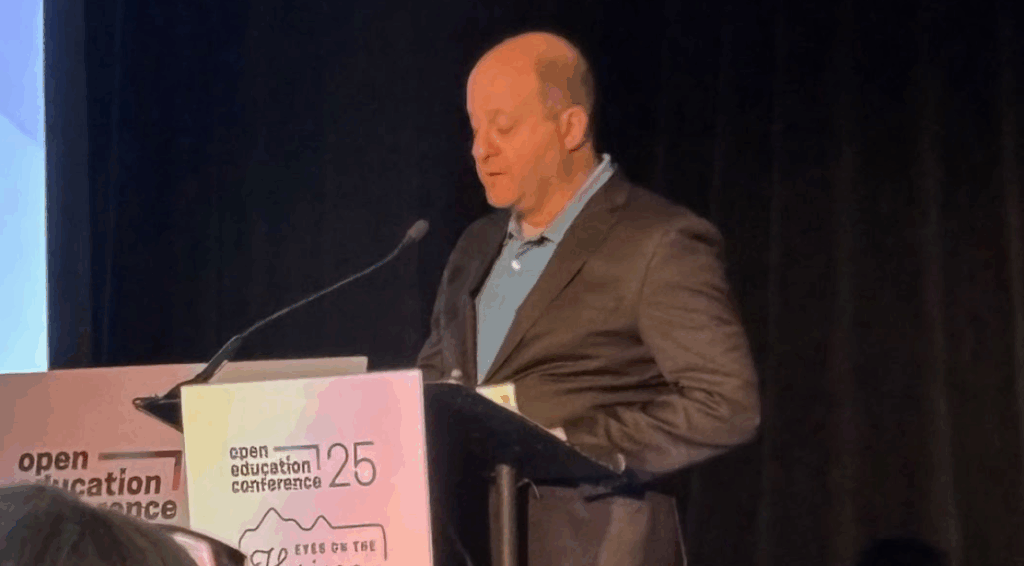
To kick off the conference, Governor Jared Polis celebrated Colorado’s Zero Textbook Cost programs and their positive impact on students. A couple of weeks later, he underlined this by including renewed funding for this program in his proposed budget. Moving from the institutional to the interpersonal, adrienne marie brown’s lunchtime plenary challenged participants to find personal authenticity while building bridges with those who have different perspectives. 
Across three days, thousands of participants learned from practitioners, students, and researchers working on many areas of OER. The Scaling OER: Lessons from Five Statewide Grant Programs panel shared how five states—California, Colorado, Minnesota, New York, and Wisconsin—have approached open education and what they’ve learned. As someone working mainly in California, I found it fascinating to hear how others  tackled similar goals with different challenges. Later that day, I also sat in on Alexander Karan’s presentation on the fantastic dashboard, which started as a Michelson 20MM Spark Grant–funded project that began at Chabot College and now operates on seven California Community College campuses. The data dashboard allows researchers to ask questions identifying potential impacts and gaps in the OER and Zero Textbook Cost programs. 

The last session I attended was one I plan to rewatch with a pen in hand. During “A Positive Agenda for Open Education as Public Good,” we were called to be visionary about the future we want while taking actionable measures to set it up now. I plan to revisit many sessions I missed and re-watch several I attended. The Sched site now provides the recordings.   

The OER Movement is more than materials or structures;  it relies on the people who make it possible. Reconnecting with the open education community from across California and the country was an absolute joy. The importance of building and maintaining this community is immense, I am so grateful the conference makes this possible. 

Marissa Martinez, Senior Coordinator of Student Engagement, Michelson 20MM

As the education landscape rapidly evolves, Open Educational Resources (OER) offer a transformative way to make learning more accessible, equitable, and adaptable. It’s important that we empower students to fight for OER on their campuses. This year’s conference ensured students could lead discussions on how they can contribute to the OER movement as creators and advocates. 

The U.S. PIRG student textbook affordability panel demonstrated the power students have to fight for OER. Students recruited their peers, coordinated with faculty leaders, and lobbied at the state and national level for open textbooks. The keynote student panel reminded us that partnering with students is critical to shaping and strengthening the open education movement. OpenEd reaffirmed to many of us that students care about Open Education and are capable of fighting for it. We need to make sure we are effectively and proactively engaging them on our campuses. 

Theresa Huff, OER for Social Justice Instructional Designer, Loyola Marymount University

Though attending and presenting virtually, I came into OpenEd looking for specific things and direction, rather than a casual exploration. As an OER Instructional Designer, who also teaches and researches around instructional design, AI, ethics, and learner well-being, I needed very specific tools, strategies, and ideas to inform my work. I also wanted guidance on how to sustain and protect our collective OER work in increasingly uncertain times. With funding shifts and political challenges on the horizon, I wanted to learn how others are building resilience and planning for the future of open education.

At OpenEd, I found what I was looking for and am still listening to more sessions! For example, the session on Recognizing, Rewarding, and Incentivizing Working with Open Educational Resources was a great modeling of using a designed, replicable roadmap to balance the intrinsic joy of open work with meaningful extrinsic rewards. I especially appreciated how the presenters used certificates and competencies to help faculty see and celebrate the skills they develop along the way. The presentation Let’s Read Together: Renewables for and by Business Undergrads About Business News sparked ideas for integrating AI-driven personalization and real-world application for use with my own students, connecting learning directly to students’ lived experiences. An unexpected, interesting session on Federated Open Learning Resources expanded my view of how decentralized networks might preserve and safeguard OER against institutional or political volatility. They can even do so while enhancing global accessibility and community. Though each session offered a piece of what I needed, I’m looking forward to continuing to sip on the other recorded sessions in the weeks ahead. It was such a lift to  protect and reimagine what openness can mean in future practice by inspiring each other.

Looking Ahead
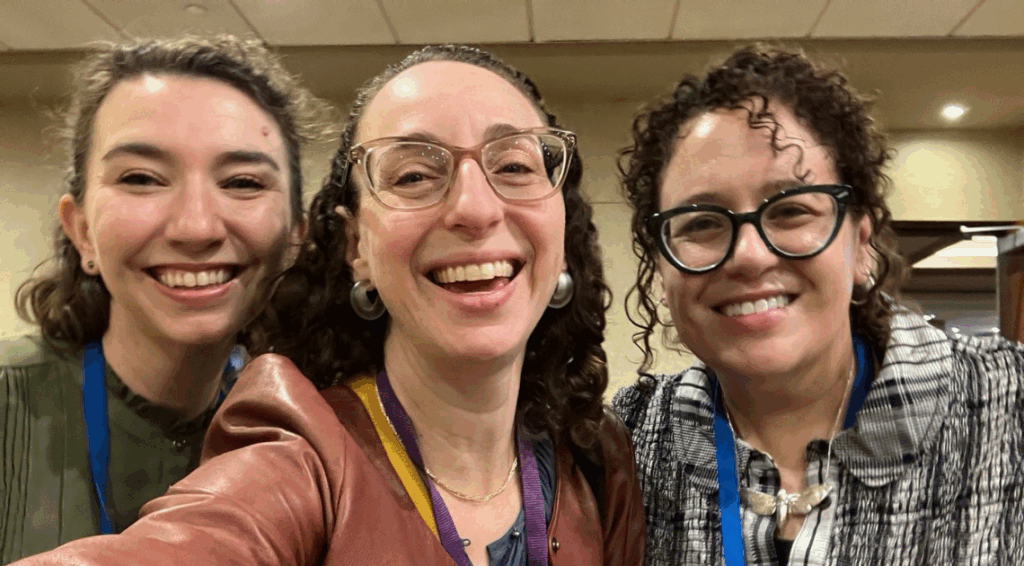
As we reflect on the rich conversations, bold ideas, and renewed sense of purpose that emerged from this year’s Open Education Conference, we are reminded of the collective power of this community and the shared commitment that drives it forward. The insights gathered will continue to inform and strengthen our work in the months ahead. Michelson 20MM remains deeply grateful for the opportunity to learn alongside so many dedicated practitioners and to support the growing movement for accessible, equitable, and student-centered education. Together, we will keep building a future where open education is a reality for all.


About the Michelson 20MM Foundation

Michelson 20MM is a private, nonprofit foundation working toward equity for underserved and historically underrepresented communities by expanding access to educational and employment opportunities, increasing affordability of educational programs, and ensuring the necessary supports are in place for individuals to thrive. To do so, we work in the following verticals: Digital Equity, Intellectual Property, Smart Justice, Student Basic Needs, and Open Educational Resources (OER). Co-chaired and funded by Alya and Gary Michelson, Michelson 20MM is part of the Michelson Philanthropies network of foundations.

From Keynotes to Community: What We Learned at the 2025 California OER Conference

By Cailyn Nagle

This August, the California OER Conference offered both an opportunity to learn from practitioners and a chance to build community. While much of the conference took place online, the Michelson 20MM Foundation was happy to sponsor the conference and host two regional, in person happy hours. 

Kicking Off: Keynotes and Collaboration in Culver City

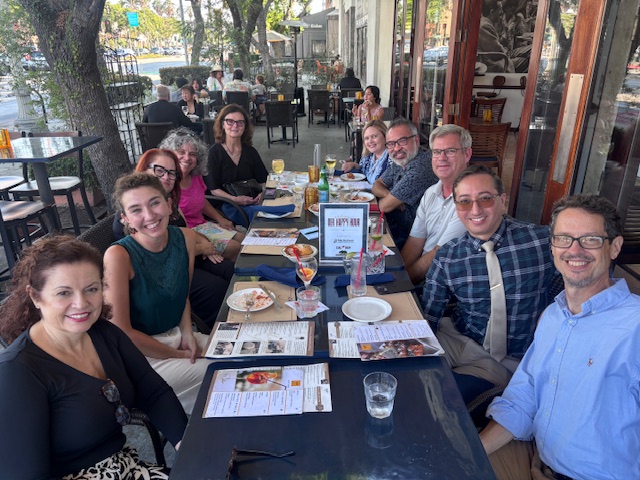
The evening before the start of the event, faculty, administrators, and advocates from across Southern California joined us for the first happy hour. The California OER community has made tremendous strides driven by the strong spirit of collaboration cultivated across the OER ecosystem. Luckily, sometimes that collaboration can also include collaborating to eat some pizza.  

Dr. David Wiley kicked off the conference Wednesday morning with the first keynote of the event, during which he shared his perspective on AI, OER sustainability, and the future of open education. Dr. Wiley, founder of Lumen Learning, which provides low cost course materials through leveraging high quality OER, helped shape the open education movement and authored the influential 5 Rs of OER.  

Thursday’s keynote, “The Future of Equity in OER Amid a Shifting Landscape,” pulled voices from across the country together. They shared an important and challenging conversation about the shifting national landscapes’ impact on the field. Open education practitioners approach the work from different contexts and perspectives, but are unified in the desire to build a better future for students and educators alike. Amid recent unprecedented scrutiny and challenges, hearing from OER practitioners dedicated to centering the needs of students within this atmosphere was an invaluable contribution to the conference.

Highlighting Michelson 20MM Spark Grantees and Other Sessions

The conference’s sessions ranged from updates on projects to new research and case studies. While focusing on California, the conference included participation from Connecticut, Florida, and Texas. Two strong currents throughout the conference were an interest in AI and the ongoing impact of the California Community College’s (CCC)  Zero Textbook Cost (ZTC) program.

AI was covered from multiple angels beyond the keynote including best practices, a survey of trends and preferences, and multilingual education. Over the two and a half days of the conference, six AI related sessions were offered, which shows a strong interest from practitioners and the field. During Bay View’s session, which previewed their newest national survey, they shared that 62% of California faculty and 87% of California’s students reported using the technology.

The other strong thread woven throughout the event was the ongoing impact of the ZTC programs growing across the CCC system. With most ZTC programs using OER to bring their textbooks costs to zero, it is no surprise that the project, now in its final funding phases with hundreds of degree programs underway, has garnered deserved attention. Some of the sessions focused on providing updates on the progress of the system-wide effort while others gave a peak into more regional projects. The presenters from Chabot College gave an update on a multi-campus effort to build a dynamic dashboard created from diverse sets of data that shows the impacts, gaps, and outcomes of ZTC efforts. The dashboard, funded through a Michelson 20MM Spark Grant, has gained momentum with new campuses signing on to participate. Irvine College also featured another Spark Grant-funded ZTC program that investigates how students find and access ZTC efforts.  

Beyond these themes, the Systems Update from the University of California (UC), the California State College and University (CSU), and the CCC offices shared the upcoming open education projects, challenges, and direction the largest systems of higher education in the country are considering. Other sessions took a more detailed look at issues facing institutions of higher learning, such as automatic textbook billing. Additionally, faculty from Eastern Connecticut State University sharing new research in their session ‘Is Automatic Textbook Billing Beneficial for Your Institution? A Case Study.”

Closing Out with Camaraderie in Oakland

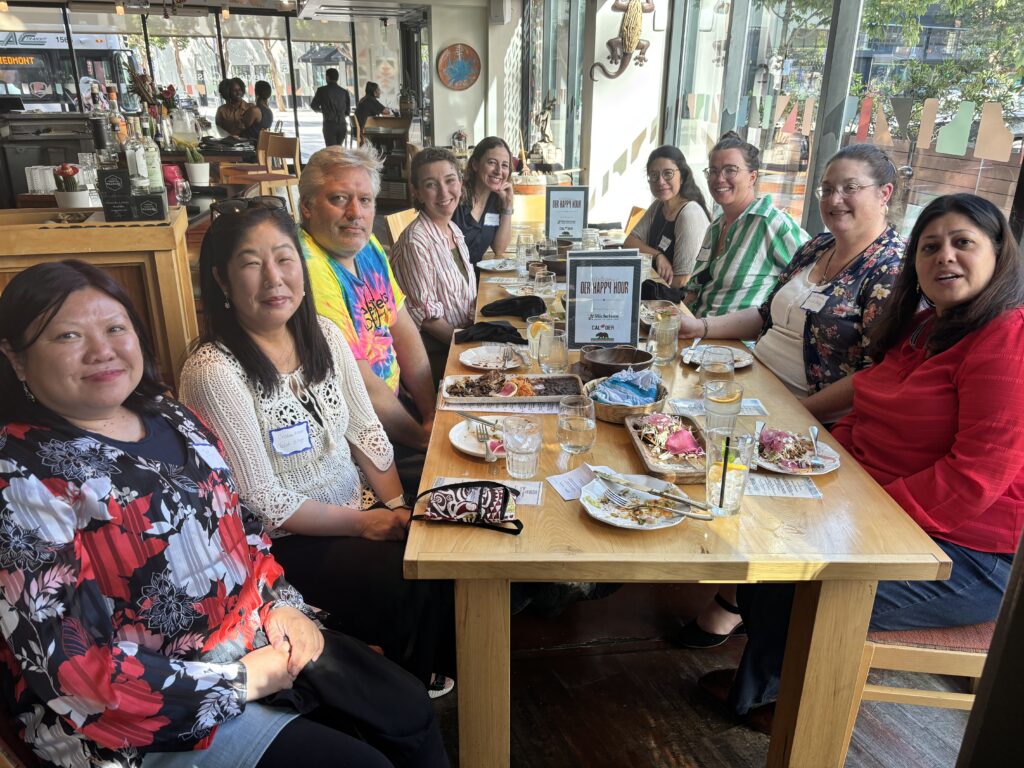
Educators and open community members from CCC, UC, and local private colleges closed the conference in Oakland at  the second Michelson 20MM OER Happy Hour. While we have been happy to host four previous similar events in Los Angeles, this was our first in the Bay Area. With guests coming in on trains, carpools, and around the block, we are deeply grateful to all who attended the event. While open education is a growing field, and much larger than even just a few years ago, many OER practitioners often feel siloed in their work. That makes building community and connections a vital part of creating the thriving and sustainable OER ecosystem we need. We are honored to be part of building that community.


Michelson 20MM Foundation

Michelson 20MM is a private, nonprofit foundation working toward equity for underserved and historically underrepresented communities by expanding access to educational and employment opportunities, increasing affordability of educational programs, and ensuring the necessary supports are in place for individuals to thrive. To do so, we work in the following verticals: Digital Equity, Intellectual Property, Smart Justice, Student Basic Needs, and Open Educational Resources (OER). Co-chaired and funded by Alya and Gary Michelson, Michelson 20MM is part of the Michelson Philanthropies network of foundations.
A Boost for OER Champions: LMU Is Creating Tools for Visibility and Recognition

A Boost for OER Champions: LMU Is Creating Tools for Visibility and Recognition

A New Resource to Meet a Growing Need

Across California, faculty members are embracing Open Educational Resources (OER) to reduce students’ costs and increase their access. As OER gains prominence, many instructors face a familiar challenge: How to effectively communicate the value of OER to their students, colleagues, and institutions.

Faculty who run OER programs often create exciting programs with little support for sharing their work. They write, revise, and implement new materials, but lack the marketing tools to help others understand the impact. Loyola Marymount University (LMU) understands that without awareness and visibility, even the most transformative OER can remain underused.

The Toolkit Filling the Gap

With a 2025 Michelson Spark Grant, LMU is addressing that gap. They will develop an openly licensed OER for Social Justice Marketing and Advocacy Toolkit. The toolkit will offer ready-to-use, customizable materials that faculty, students, and staff can use to promote and sustain OER adoption.

These resources aren’t one-size-fits-all. They’re designed with California’s diverse institutions in mind. The toolkit includes:

  • A Faculty Promotion Kit to support faculty in advocating for their adoption, adaptation, and creation of OER
  • An Awareness and Engagement Kit to engage students and faculty in OER adoption through interactive and visually compelling materials.

Everything will be adaptable. Institutions can contextualize materials to reflect their mission, values, and student populations.

Co-Created with Students, Built for Community

What sets this project apart is its emphasis on collaboration. Students will play a key role in shaping the toolkit by supporting graphic design and video storytelling, among other roles. LMU’s approach shifts away from top-down advocacy models, instead centering student creativity and voice.

This hands-on, participatory model reflects the values at the heart of OER: access, agency, and shared ownership. “We’re not just promoting OER, we’re building infrastructure that supports it long-term,” said Cailyn Nagle, Senior Program Manager for OER at Michelson 20MM. “This toolkit will give faculty and students what they need to keep the movement going, together.”

Designed for Impact and Built to Last

The project will pilot with LMU’s existing OER faculty teams and then scale through partnerships with the Southern California Electronic Library Consortium (SCELC). Materials will be housed in the OER for Social Justice Handbook and made freely available for adaptation. At the same time, trainings and workshops across the state will help campus leaders use the toolkit in real time. LMU’s efforts will foster  professional development, peer support, and new collaborations.

By investing in visibility, this project helps institutions recognize and reward OER work. It supports faculty who want to integrate OER into tenure conversations and gives students the tools to become advocates on their own campuses. Most importantly, it ensures that OER continues to grow not just as a set of resources, but as a movement rooted in equity, inclusion, and shared success.


About Michelson 20MM Foundation

Michelson 20MM is a private, nonprofit foundation working toward equity for underserved and historically underrepresented communities by expanding access to educational and employment opportunities, increasing affordability of educational programs, and ensuring the necessary supports are in place for individuals to thrive. To do so, we work in the following verticals: Digital Equity, Intellectual Property, Smart Justice, Student Basic Needs, and Open Educational Resources (OER). Co-chaired and funded by Alya and Gary Michelson, Michelson 20MM is part of the Michelson Philanthropies network of foundations.

Irvine Valley College: Investigating a More Student Centric Approach to ZTC

Irvine Valley College: Investigating a More Student Centric Approach to ZTC

Irvine Valley College (IVC) wants to improve how students find, navigate, and complete Zero Textbook Cost (ZTC) Degrees through a Michelson Spark Grant. IVC is investigating the best way to design a system centered on the student experience. The goal is to make ZTC pathways user-friendly, easy to identify, accessible, and practical.

Centering Students in ZTC Innovation

IVC is asking: How are students being directed to these resources? Are the instructions clear, and can a student realistically navigate and access what the institution claims to offer? 

“Everyone wants ZTC degrees to benefit students, but learning how to maximize those benefits is going to take research and hard work,” said Cailyn Nagle, OER Senior Program Manager at Michelson 20MM. “This project will offer insights for colleges statewide that are building ZTC Degrees.” The study will identify what students need to access and complete ZTC pathways. It will also analyze how ZTC options are presented online and which tools students find most helpful.

The Role of Students in the Research

IVC will engage students as research partners throughout the project. Using a tiered model, students will lead focus groups, administer survey collection, analyze data, co-author findings, and present results at statewide conferences. The project offers participation options ranging from one-time involvement to full-semester engagement.

Delivering Actionable Research and Resources

The research will produce a detailed report with student-driven findings and recommendations. It will include a preliminary plan to build a student-friendly ZTC Degree interface. Additionally, the project will develop materials that can be shared widely. These outputs will guide IVC’s future ZTC planning and support similar efforts at other colleges.

Commitment to Equity and Inclusion

IVC serves a diverse student body, including many first-generation and working students. The project reflects their commitment to equity by embedding student perspectives throughout the research process. It encourages ZTC pathways that are clear, current, and centered on what students actually need. 

Looking Ahead: A Scalable Model for ZTC Degrees

The Michelson Spark Grant will support research during the academic year. After that, IVC will share its findings broadly across California’s community college system. The project aims to document what works in ZTC implementation and why. IVC hopes to help shape a future where all students earn degrees without costly textbooks. Ultimately, they will influence how colleges design, communicate, and operationalize ZTC pathways to benefit.


About the Michelson 20MM Foundation

Michelson 20MM is a private, nonprofit foundation working toward equity for underserved and historically underrepresented communities by expanding access to educational and employment opportunities, increasing affordability of educational programs, and ensuring the necessary supports are in place for individuals to thrive. To do so, we work in the following verticals: Digital Equity, Intellectual Property, Smart Justice, Student Basic Needs, and Open Educational Resources (OER). Co-chaired and funded by Alya and Gary Michelson, Michelson 20MM is part of the Michelson Philanthropies network of foundations.

Inside the ZTC Summit: Building Affordable Pathways in CCCs

Inside the ZTC Summit: Building Affordable Pathways in CCCs

By Cailyn Nagle and Marissa Martinez

Earlier this month, the Michelson 20MM Foundation joined faculty, administrators and researchers at the Zero-Textbook Cost (ZTC) Degree summit hosted by College of the Canyons. Over a hundred ZTC and OER practitioners gathered to learn about efforts to lower course material costs in California Community Colleges (CCC).

A Statewide Commitment to Affordability

In 2021, Governor Newsom allocated $115 million to fund the current ZTC Degree program, the largest single investment in course material affordability nationally. “ZTC Degrees” are degree programs composed entirely of courses that eliminate textbook costs by using high-quality, no-cost content, with an emphasis on OER. The program builds on a 2016 pilot that created 33 ZTC Degrees and Career Technical Education certificates at 23 CCCs, saving students $7 for every $1 invested. 

Celebrating Progress and Looking Ahead

The morning kicked off with welcoming remarks from Hildegarde B. Aguinaldo, president of the CCC Board of Governors, and David Andrus, interim president of the College of the Canyons. 

Following the welcome, the Office of the Chancellor’s update provided a lot of news worth celebrating! They shared that the program has successfully allocated the majority of their funding and that 379 ZTC pathways will be available across the system by this fall’s term. The positive impact this has on accessibility across the system will be immediately felt by students. These programs will launch this fall, with even more ZTC degrees under development. After hearing such inspiring progress, the event split into breakout sessions on topics like AI in OER, ZTC and general education, and OER and ZTC Advocacy. 

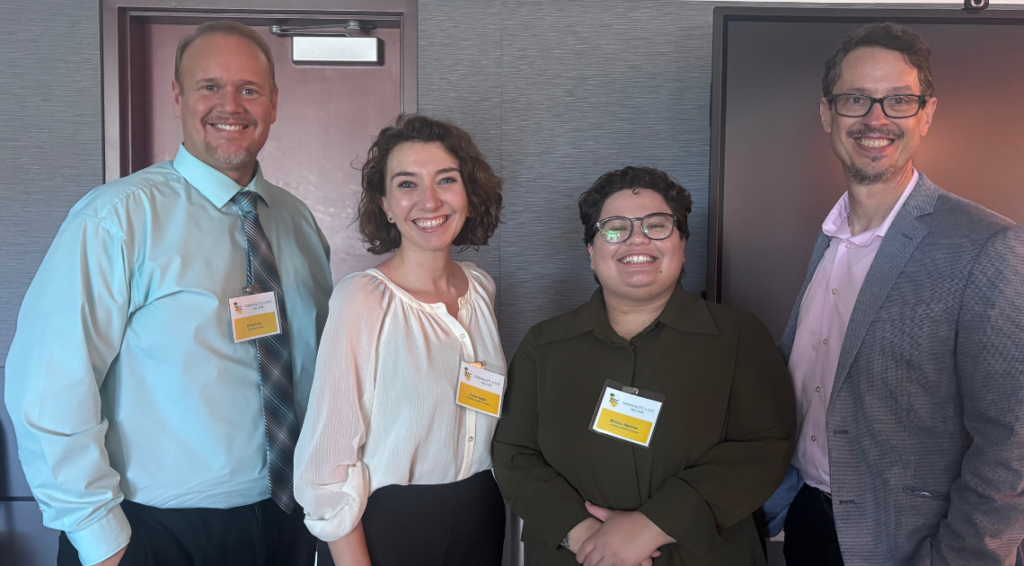
Left to right: Chad Funk, Cailyn Nagle, Marissa Martinez, and James Glapa-Grossklag at the ZTC Summit

“Effective Approaches to Engaging Students in OER/ZTC Efforts,” a session led by Marissa, was filled with campus faculty, librarians, and administrators. They were eager to learn more about how they could best engage students to support OER and ZTC advocacy. The presentation encouraged participants to use an advocacy framework when thinking about ways to partner with students for their OER projects. 

Each session group discussed their project goals, strategies, and tactics to understand where students can most effectively support their OER and ZTC efforts. Participants learned about some of the tactics student-leadership can use to further the goals of their campaigns like writing resolutions or hosting on-campus events. By the end of the sessions, attendees were left with a campus-specific OER/ZTC advocacy strategy, a strategic understanding of the role students play as partners in the work, and the tactics students can use to push the needle forward on OER adoption and ZTC degree implementation.

Faculty Leadership and Systemwide Momentum

Michelle Pilati, Psychology Professor at RioHondo College and Project Director of the Academic Senate’s Open Educational Resource Initiative (OERI), led the keynote session. She outlined the fantastic work faculty have done across the state, from curating OER collections to supporting OER liaisons across colleges. OERI plans to continue supporting OER development, cross-discipline sessions, and provide professional development opportunities for CCC educators. They will also continue to advocate for and support the implementation of open course materials across the system for at least another decade. 

Innovative Tools and Local Success Stories

The day wrapped up with individual colleges digging into their local success stories, projects, and research, including Michelson 20MM Spark Grant recipients from Chabot College. Colleges like Coalinga, Diablo Valley, Leemore, and Mira Costa Colleges shared more about the strategies they have taken locally to build successful ZTC programs. This includes focusing on full-time faculty outreach as a point of programmatic sustainability to evaluating the negative impacts high textbook costs have on students. 

Chabot College gave an in-depth preview of the interactive data dashboard built over the last year. Nine colleges are currently piloting the dashboard, which helps ZTC programs to identify gaps in their pathways, track impacts on students, and more. The room was buzzing with excitement as Dr. Alexander Karan, who played a large role in building the system, gave a tour of the program. It’s rare to get “oohs and aahs” from an audience looking at graphs, but the Chabot team certainly earned and received them. 

A Call to Keep Building

It is not easy to build something as large, interconnected, and visionary as Zero Textbook Cost Degrees, but educators across California are doing just that. Librarians, administrators, instructors, researchers and others will continue the hard work of lowering costs for students and increasing access to course materials. The State of California must rally behind those who are rolling up their sleeves to support students throughout this system and beyond. We must support those who are building a higher education system that reflects the equity and opportunity our state deserves.  


About the Michelson 20MM Foundation

Michelson 20MM is a private, nonprofit foundation working toward equity for underserved and historically underrepresented communities by expanding access to educational and employment opportunities, increasing affordability of educational programs, and ensuring the necessary supports are in place for individuals to thrive. To do so, we work in the following verticals: Digital Equity, Intellectual Property, Smart Justice, Student Basic Needs, and Open Educational Resources (OER). Co-chaired and funded by Alya and Gary Michelson, Michelson 20MM is part of the Michelson Philanthropies network of foundations.

Cal State Dominguez Hills Launches Student Fellowship to Advance OER Policy and Access 

Cal State Dominguez Hills Launches Student Fellowship to Advance OER Policy and Access

The Michelson 20MM Foundation is pleased to support California State University, Dominguez Hills with a 2025 Open Educational Resources (OER) Spark Grant. This grant funds a new student fellowship that will promote OER policies and adoption across five CSU campuses.

The Challenge: Textbook Costs and Student Voices

College textbooks remain unaffordable for many students. There is a solution, though. OER reduces costs, increases flexibility, and lets students take ownership of their learning. The student perspective, however, often remains underrepresented in OER adoption efforts.

A Regional Fellowship for OER Advocacy

CSU Dominguez Hills is changing that. The university will lead a regional OER student advocacy fellowship in partnership with:

  • CSU Channel Islands
  • CSU Fullerton
  • Cal State LA
  • Cal State Northridge

Through this project, each campus will hire one student fellow to lead local outreach and advocacy.

Empowering Students to Lead

Fellows will promote OER and Zero-Cost Course Materials through events, peer engagement, and collaboration with faculty and staff. They will also work together as a community of practice, sharing strategies and supporting one another throughout the year. At the same time, fellows will receive training and mentorship from the campus Affordable Learning Solutions (AL$) coordinators. 

“Students have the power to drive OER adoption and shape policy across their own campuses, but need support and resources to do so,” said Cailyn Nagle, Senior Program Manager for OER at Michelson 20MM. “Fellowships like this one create lasting, student-driven change.”

Scaling for Systemwide and Statewide Impact

The project has potential for systemwide impact. Since the CSU AL$ coordinators meet monthly, there is an organic platform to scale the model across all CSU campuses. The CSUDH team also anticipates that there will be opportunities to present at national OER conferences. 

This program will directly impact students at five minority serving institutions in Southern California. These campuses serve over 121,000 students, who will benefit from affordable, accessible course materials.

To measure success, the team will track:

  1. Hiring and training five fellows and launching a shared outreach strategy
  2. Student and faculty engagement, including coordination with the CA State Student Association 
  3. Campus resource mapping to sustain OER advocacy beyond the grant period

This project aims to become a model for student-driven OER advocacy throughout California and nationwide. By centering students, this initiative promotes equity, leadership, and lasting systems change. Stay tuned for more in the coming year.


About the Michelson 20MM Foundation

Michelson 20MM is a private, nonprofit foundation working toward equity for underserved and historically underrepresented communities by expanding access to educational and employment opportunities, increasing affordability of educational programs, and ensuring the necessary supports are in place for individuals to thrive. To do so, we work in the following verticals: Digital Equity, Intellectual Property, Smart Justice, Student Basic Needs, and Open Educational Resources (OER). Co-chaired and funded by Alya and Gary Michelson, Michelson 20MM is part of the Michelson Philanthropies network of foundations.
Affordable Learning for All: Spotlight on the 2025 OER Spark Grantees and Their Projects

Affordable Learning for All: Spotlight on the 2025 OER Spark Grantees and Their Projects

Michelson 20MM is thrilled to announce the 2025 Open Educational Resources (OER) Spark Grantees: California State University Dominguez Hills, Irvine Valley College, and Loyola Marymount University! Their innovative projects will advance the following focus areas:

  • Improve the quality and reach of OER marketing materials, particularly for under-resourced programs.
  • Mobilize students and faculty to pass OER policies at the University of California (UC), California Community Colleges (CCC), and California State University (CSU) systems.
  • Support the implementation of California’s investment in zero-textbook-cost (ZTC) degree programs within the CCC system.

Meet the Grantees and Their Projects

California State University Dominguez Hills (CSUDH) will launch a student fellowship program across five CSU campuses. Building on the Affordable Learning Solutions (AL$) Program, they will empower students to advocate for OER by promoting benefits including cost savings, flexibility, and student success. Students will collaborate, share strategies, and advocate for OER adoption and policy changes. Beginning at five campuses, the project has the potential to scale statewide, benefiting hundreds of thousands of students. 

Irvine Valley College (IVC)’s project will seek to improve the student-facing experience of ZTC degree pathways. Making ZTC degrees easy to navigate and accessible is not easy, relying on often disjointed data and limited resources. This project will focus on understanding the challenges students face through qualitative research, including surveys and focus groups. By collecting data from students and involving them as research partners, the initiative will study what it would take to create a practical, student-centered ZTC system that can be scaled across institutions. The project also aims to integrate findings into a clear, actionable plan for creating accessible, transparent, and sustainable ZTC pathways that can enhance student success and OER adoption statewide.

Loyola Marymount University’s (LMU’s) OER for Social Justice Marketing and Advocacy Toolkit will build and diffuse customizable marketing materials for promoting OER at under-resourced institutions. The project will produce two adaptable OER marketing kits: one designed to help faculty advocate for OER adoption and another aimed at educating both faculty and students about OER’s benefits. Students will actively co-create content, participate in focus groups, and contribute to education campaigns, using proven advocacy methods. By centering student voices and adaptable messaging, the toolkit will be relevant across different institutional types. 

Why OER Matters

OER allows for greater flexibility in teaching and learning, while empowering students to take control of their education. As Cailyn Nagle, Senior Program Manager for OER, shared, “OER not only lowers costs but also transforms the educational experience by providing students with more accessible, flexible, and relevant learning materials.” By promoting OER adoption and advocacy, these projects help bridge gaps in educational access and equity across California’s diverse institutions and beyond.

Learn More

We look forward to sharing more about the impact of these projects as they build on the future of affordable and accessible education for all students.


About the Michelson 20MM Foundation

Michelson 20MM is a private, nonprofit foundation working toward equity for underserved and historically underrepresented communities by expanding access to educational and employment opportunities, increasing affordability of educational programs, and ensuring the necessary supports are in place for individuals to thrive. To do so, we work in the following verticals: Digital Equity, Intellectual Property, Smart Justice, Student Basic Needs, and Open Educational Resources (OER). Co-chaired and funded by Alya and Gary Michelson, Michelson 20MM is part of the Michelson Philanthropies network of foundations.

To sign up for our newsletter, click here

Open Educational Resources Spark Grants 2025 Funding Cycle Informational Webinar

Open Educational Resources (OER) are a transformative tool in higher education, offering equitable access to learning materials and empowering students and educators alike. By reducing the financial burden of costly textbooks, OER fosters a more inclusive educational environment, ensuring that all students—regardless of their financial background—have access to high-quality learning resources. The Michelson Spark Grants funding cycle aims to further advance this vision by supporting innovative projects that scale OER implementation, build capacity, and enhance outreach.

The OER Spark Grants funding cycle will open for proposals from March 3rd – 17th.

Focus Areas

During this cycle, we seek to fund projects that support systems-level strategies with potential to create positive impact at scale and inform public policy. Our focus areas include:

  • Supporting the implementation of California’s investment in zero textbook cost (ZTC) degree programs within the California Community College (CCC) system.
  • Mobilizing students and faculty to pass OER policies at the University of California (UC), CCC, and California State University (CSU) systems.
  • Improving the quality and reach of OER marketing materials, particularly for under-resourced programs at institutions nationwide. 
  • Researching and conducting public education around automatic textbook billing, with a focus on student experience and consumer protection.
  • Investigating the impacts of textbook billing and accessibility state and federal policies.

Funding Cycle Details

The program provides a just-in-time grantmaking process to fill urgent needs for higher education organizations that are aligned with our focus areas. The Spark Grants Program is available to United States-based nonprofits. Projects with a national scope must impact California. Additionally, proposals where Michelson Spark Grant funds are part of a larger overall project with multiple funding streams are welcomed.

Join Us to Learn More

Join members of the grant committee on February 20th to learn more about the focus areas and funding opportunity. Join Senior Program Manager Cailyn Nagle and Director of Programs and Operations Ryan Erickson-Kulas on February 20, 2025, for an informational webinar. During it, they will provide an in-depth overview of the Spark Grants program, highlight past awardees, and share detailed updates on the student basic needs funding cycle.

View the Recording

Missed the webinar? A recording is available below:

Little Black Dress and OER: Sticking with the Classics Doesn’t Go Out of Fashion

LBD and OER: Sticking with the classics doesn’t go out of fashion

By Cailyn Nagle

Just like the Little Black Dress (LBD), which has been a wardrobe essential for decades, foundational strategies in the open educational resources (OER) community are equally timeless and effective. While the silhouette, material, and styling has shifted with eras, the Little Black Dress remains a wardrobe-building keystone. Shifting from a conference presentation to an event gala context requires swapping out shoes and accessories, the LBD allows effortless transitions between day and night. As technology, governments, and society shifted the LBD remained. Sometimes, the classics are classics for a reason. Sometimes there’s nothing wrong with returning to a time-trusted foundational piece.

Factors Contributing to the Decrease in OER Awareness

For the first time since Bay View analytics began reporting on OER awareness, fewer faculty knew about or used OER materials. The dip was small, but it marked a change in an over a decade-long trend. Contributing factors include administrators taking control of materials assigned in courses. In the past, Bay View has reported on the increasing number of administrators who are playing a larger role in deciding which course materials will be used. Another factor is the increasing prevalence of automatic textbook billing. Advocates and practitioners should push against these factors, but they are long-term battles. We can also make daily impacts through the choices and tactics we use in our programs. Like the LBD, the OER community can revisit and refresh some of the trusted basics.

Recruitment: An Eternal Effort

As a community organizer, I learned another acronym: ABC or Always Be (re)Cruiting. Due to natural attrition, the volunteer pool would eventually dry up without a steady flow of new people. Along with dedicated recruitment drives throughout the year, recruitment was also an ongoing process. We cast a wide net with strong marketing and outreach, including follow-up and onboarding year-round, and incorporating recruitment across all activities.

Ways to Increase OER Capacity and Resources

OER community, bandwidth, capacity, and resources often limit the ability to incorporate these strategies. Not every OER program has the capacity to knock on the faculty doors, hold one-on-one conversations, or access customizable OER marketing materials. There is no quick fix for capacity, but the Michelson 20MM Foundation has included the creation of marketing and outreach materials in this year’s OER Spark Grant focus areas. We hope grants will provide the resources programs need to create and share those materials.  

Consistent new members means organizing creates engaging experiences for long-time volunteers while welcoming and orienting newcomers. Volunteer activities, from door knocking to panel events, begin with a baseline explanation of goals and training. New attendees can follow along, even if 90% of the crowd are experienced volunteers. Some OER events and conferences have stepped back from strong 101 programming in favor of advanced conversations on pedagogy, deep research, and other fascinating topics. Deeper engagement is needed, but our community must also extend a ladder to new members. These new OER-curious practitioners need to build the knowledge base that strengthens our movement.

Understanding What Motivates the OER Community

What are axioms but the reiteration of a classic concept into a memorable phrase? In “Axioms of Organizers,” community organizer Fred Ross Sr. quipped: “It’s the way people are that matters, not the way you’d like them to be.” In the OER world, community members often share what inspires and motivates them about open education. For some, it’s creating culturally responsive materials. For others, it’s the blurring of the lines between student and educator through the active knowledge creation of open pedagogy. For others, it is the global collaboration OER enables. 

These are strong motivators, but when growing our movement, we must focus the messaging on what motivates the gatekeepers of policies and resources. A recent report from Ithaka’s Dr Ioana Hulbert, Deirdre Harkins, and Dr. Mark McBride, “Charting the Course-Case Studies in OER Sustainability,” offers insights on how OER programs can build, thrive, and survive. One key finding speaks to Ross’ axiom, “OER initiatives flourish when they align with institutional priorities and are framed as a tool that can address several goals beyond affordability, such as advancing equity, access, or instructional innovation.” 

This often means identifying existing priorities for institutional leaders and tailoring OER messaging to what speaks most clearly to them. This concept holds true beyond courting administrators focused on completion rates or legislators concerned with student savings. The OER community must strategically shift focus to recruit and build the movement—from student government leaders to bookstore managers to department heads.

A Timeless Reminder to Step Back and Focus on Our Goals

Truth be told, I have six little black dresses. They include a gold beaded one from the 1980s with a matching bolero jacket, a simple eyelet one from the Gap, and an A-line beatnik with pink trimming from the 1960s. Basics are meant to be built upon and improved, but we never truly move past them. When unsure of my next steps, I step back, focus on my goals, and remember my three-letter fundamentals.


About Michelson 20MM

Michelson 20MM is a private, nonprofit foundation working toward equity for underserved and historically underrepresented communities by expanding access to educational and employment opportunities, increasing affordability of educational programs, and ensuring the necessary supports are in place for individuals to thrive. To do so, we work in the following verticals: Digital Equity, Intellectual Property, Smart Justice, Student Basic Needs, and Open Educational Resources (OER). Co-chaired and funded by Alya and Gary Michelson, Michelson 20MM is part of the Michelson Philanthropies network of foundations.

To sign up for our newsletter, click here

The Spark Community Advisors: Championing Open Educational Resources in 2025

The Spark Community Advisors: Championing Open Educational Resources in 2025

Open Educational Resources (OER) provide equitable access to learning materials, empowering both students and educators. By reducing the financial burden of expensive textbooks, OER fosters a more inclusive educational environment. They can help ensure that all students, regardless of financial background, have access to high-quality learning resources. 


The 2025 OER Michelson Spark Grants funding cycle furthers these positive impacts. It does so by supporting innovative projects that scale OER implementation, build capacity, and enhance outreach.

2025 Open Educational Resources Focus Areas

In order to drive a scalable impact within the communities we serve, the funding cycle emphasizes the following areas:

  • Supporting the implementation of California’s investment in zero textbook cost (ZTC) degree programs within the California Community College (CCC) system.
  • Mobilizing students and faculty to pass OER policies at the University of California (UC), CCC, and California State University (CSU) systems.
  • Improving the quality and reach of OER marketing materials, particularly for under-resourced programs at institutions nationwide.
  • Researching and conducting public education around automatic textbook billing, with a focus on student experience and consumer protection.
  • Investigating the impacts of policies relating to textbook accessibility, OER, and textbook price transparency at the state and federal level.

Meet the Spark Community Advisors

The Michelson 20MM Foundation believes that those closest to the issues we’re working on understand a community’s needs best and are closest to the solution. With this in mind, we are proud to introduce a remarkable group of advisors whose expertise will shape strategies that promote equity, support vulnerable populations, and drive innovative approaches to improving OER.

Elaine Correa, Ph.D | Professor and Chair, California State University, Bakersfield, Department of Human Development, and Child, Adolescent, and Family Studies

Dr. Elaine Correa earned her Ph.D. in Administration and Policy Studies in Education from McGill University, Montreal, Canada. She joined California State University, Bakersfield (CSUB) in Fall 2016. Dr. Correa serves as Professor and Chair of the Department of Human Development, and Child, Adolescent, and Family Studies. In 2019-2020, she was Interim Associate Dean for the School of Social Sciences and Education. Dr. Correa participates in shared governance on the Academic Senate. She serves on the Academic Support and Student Services Sub-Committee.

In Fall 2023, Dr. Correa spearheaded CSUB’s first OER degree. Her department received recognition from the Chancellor’s Office as one of three CSUs to offer an OER degree program. This initiative addresses equity gaps and increases graduation rates. 

Dr. Correa advocates for social justice and community engagement. Her research and work focuses on educational equity, OER/OEP, multiculturalism, feminist pedagogy, e-learning, and service learning.

Paola Santana (she/her/Ella) | Executive Director, Glendale College Foundation

Paola Santana is the Executive Director of the Glendale College Foundation. There, she builds public awareness and collaborates with a 34-member board. Together they raise funds for student scholarships, college programs, and other critical needs.

Previously, Santana served as a Strategy Officer and Grant Maker at Lumina Foundation. In her role, she supported state efforts to increase postsecondary attainment across the nation. Santana also led UNITE-LA’s college access and success portfolio for nearly a decade. She implemented direct service college access programming and developed the organization’s higher education policy advocacy agenda. Santana began her career advising the Los Angeles Unified School District Board of Education on complex policy issues. 

She is a graduate of several leadership programs, including the Riordan Leadership Institute and the Pahara NextGen Network. A first-generation, community college transfer student, Santana earned her associate degree at Glendale Community College, baccalaureate degree at the UC, Berkeley, and Master’s in Higher Education at the Harvard Graduate School of Education.

Katie Wagman (she/her) | Senior, University of California, Los Angeles 

Katie Wagman is a fourth-year undergraduate at the University of California, Los Angeles (UCLA), studying public affairs. She is a Policy Intern with EveryLife Foundation for Rare Disease and as a Housing/Communications Policy Intern at Strategic Actions for a Just Economy (SAJE). 

Previously, Wagman was a Student Fellow for Michelson 20MM’s Textbook Affordability initiative. She worked to ensure students have equitable access to the course materials. She continues this work as the Director of Access and Equity for the undergraduate Academic Affairs Commission. In her role, Wagman is advancing textbook affordability through the UC system and implementing course marking and price transparency at UCLA. Nationally, she advocated for policy changes in the Department of Education. 

Upon graduation, Wagman plans to work in housing or healthcare policy, with a particular interest in reproductive healthcare. 

This Michelson Spark Grants funding cycle plays a crucial role in driving OER adoption. It empowers communities to overcome barriers to education through affordable learning materials. Together, we can continue creating an equitable educational landscape for students and educators alike.


About Michelson 20MM

Michelson 20MM is a private, nonprofit foundation working toward equity for underserved and historically underrepresented communities by expanding access to educational and employment opportunities, increasing affordability of educational programs, and ensuring the necessary supports are in place for individuals to thrive. To do so, we work in the following verticals: Digital Equity, Intellectual Property, Smart Justice, Student Basic Needs, and Open Educational Resources (OER). Co-chaired and funded by Alya and Gary Michelson, Michelson 20MM is part of the Michelson Philanthropies network of foundations.

To sign up for our newsletter, click here